At-Home Blood Glucose vs. A1C Tests: What’s the Difference?
At-home blood glucose vs. A1C tests: which information are you actually looking for? Both relate to blood sugar, but they answer different questions. Understanding the time period each measures can help you discuss the right option with your healthcare professional.
This comparison focuses on finger-stick glucose meters and at-home A1C kits. For A1C result ranges and confirmation questions, use our separate guide to at-home A1C results.
Medical disclaimer: This article provides general education, not personal medical advice. Do not use a consumer test alone to diagnose diabetes or change medication.
Quick Answer: What Is the Main Difference?
A finger-stick blood glucose meter measures glucose at the time of testing. An A1C test measures the proportion of hemoglobin with glucose attached and reflects average blood sugar over about three months. Neither result replaces the other: a longer-term average does not show every short-term high or low.
Blood Glucose vs. A1C: Side-by-Side Comparison
| Question | Glucose meter | A1C test |
|---|---|---|
| What does it report? | Glucose concentration at testing | Glycated hemoglobin, usually as a percentage |
| What period does it reflect? | A point in time | About three months |
| Where do results appear? | On the meter | At home or after laboratory processing, depending on the kit |
| Main question to discuss | How do readings fit my monitoring plan? | What does the longer-term result mean for my care? |
1. What a Home Glucose Meter Can Tell You
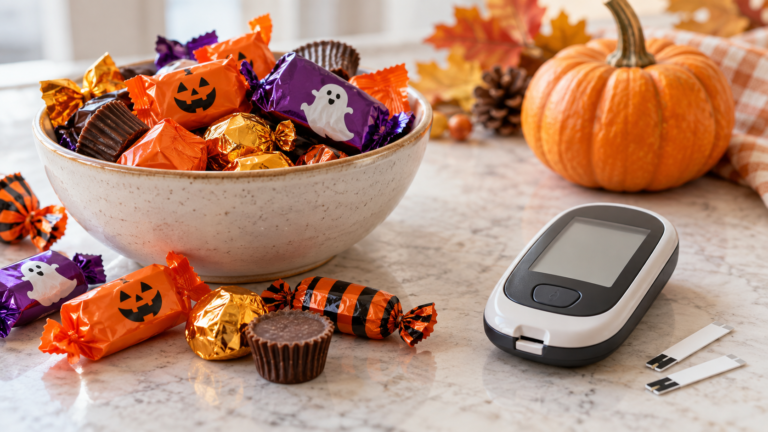
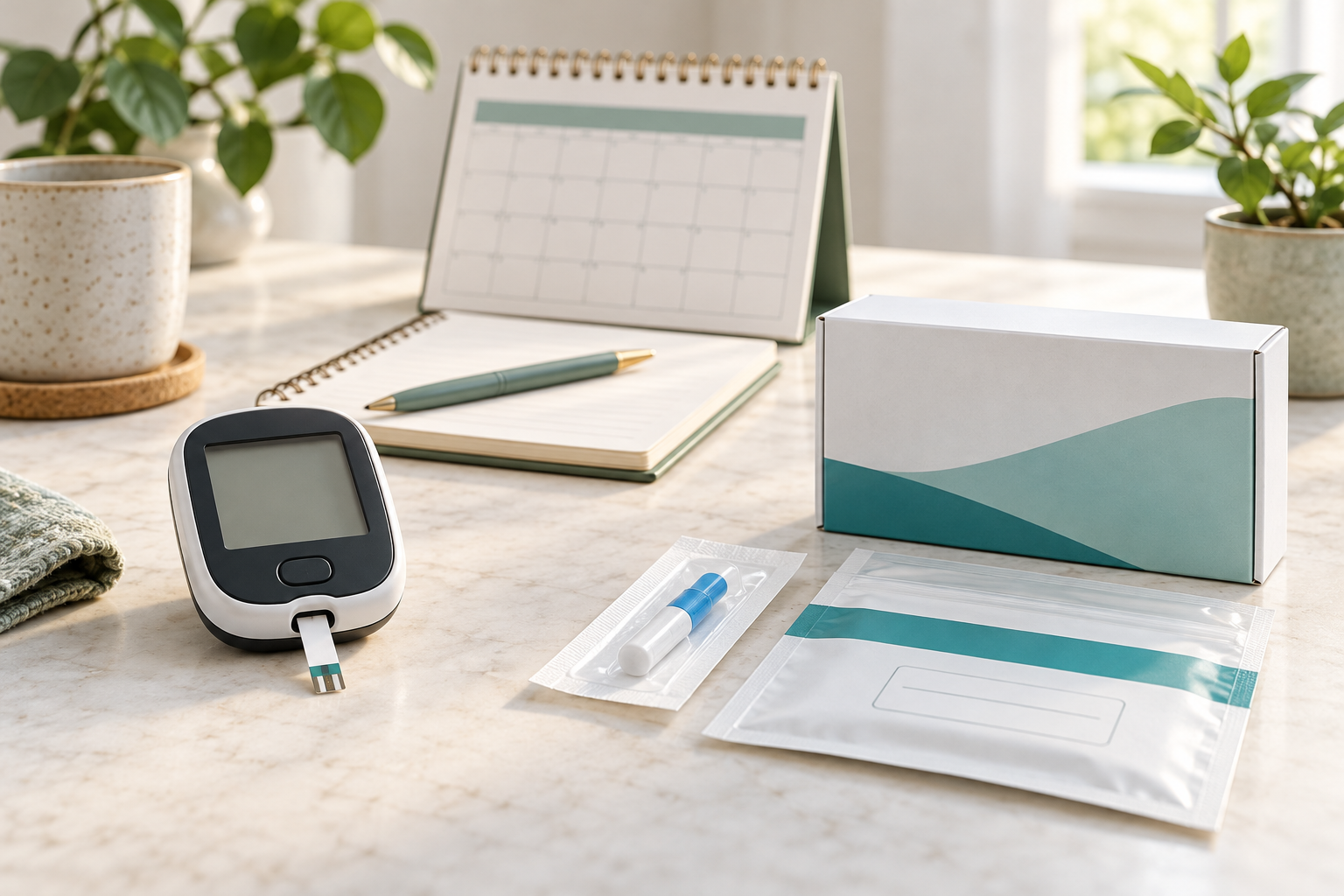
A meter usually uses a small blood drop applied to a compatible test strip. It can support glucose monitoring as part of a diabetes care plan. Your care team can explain when to check and what your individual targets mean.
Technique matters. The FDA advises following the device instructions, washing and drying your hands, and using the correct strips. Check expiration dates and storage requirements. Ask about control-solution checks and what to do when a reading seems unexpected.
Keep the reading together with its time and any context your care team requests. An isolated number without that context is harder to discuss.
2. What an At-Home A1C Kit Can Tell You
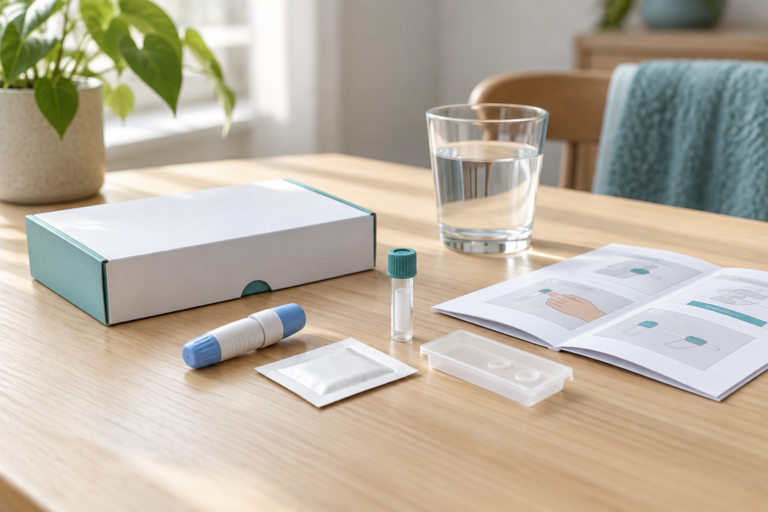
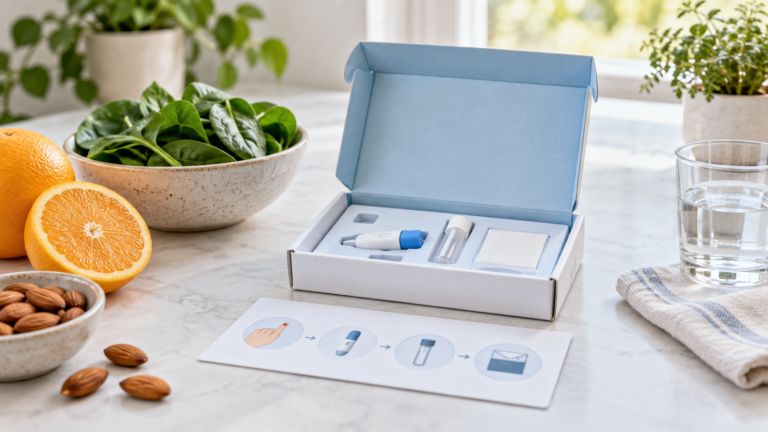
A1C gives a longer-term view rather than a reading of blood sugar right now. Some kits display a result at home; others require mailing a collected sample to a laboratory. Check the exact product’s intended use and instructions.
A1C cannot show every brief rise or fall. Conditions affecting red blood cells or hemoglobin can also complicate interpretation. For more detail, follow our A1C results guide rather than treating the percentage as a complete picture.
3. Why Can the Results Seem Different?
A single glucose reading and an A1C result describe different time periods. One reading cannot represent several months. If the numbers seem inconsistent, share the full report and your glucose record with your healthcare professional rather than deciding that one must be wrong.
They can review timing, technique, and possible reasons A1C may not accurately reflect your glucose, then decide whether another test is appropriate.
4. Monitoring Is Different From Diagnosing Diabetes
NIDDK states that over-the-counter blood glucose meters cannot diagnose diabetes. Clinical diagnosis uses appropriate blood tests and usually involves confirmation. An at-home A1C result should likewise lead to a discussion about appropriate clinical testing, rather than self-diagnosis.
If your question is “Do I have diabetes?”, contact a healthcare professional about diagnostic testing instead of choosing a monitoring device on your own.
5. Do You Need to Fast?
A1C alone does not generally require fasting. A glucose check may be scheduled before or after eating depending on the question and care plan; it is not automatically a fasting test. Follow the specific instructions you receive.
For preparation questions, read our fasting before an at-home blood test guide. Do not change prescribed medication to prepare unless your healthcare professional directs you to.
6. Questions to Ask Before Buying
- Am I looking for clinical screening, ongoing monitoring, or help understanding an existing result?
- Which test or device does my healthcare professional recommend for that purpose?
- Does this product provide a result at home or require mailing a sample?
- What supplies will I need to buy again?
- Who can explain an unexpected result?
- What should I record, and when should I contact my care team?
For a glucose meter, include compatible strips and lancets in your cost comparison. For an A1C kit, check shipping, sample acceptance, turnaround, and result support. A low initial price may not describe the complete cost.
Frequently Asked Questions
Does an A1C kit replace daily glucose monitoring?
It does not replace a monitoring plan prescribed by your care team. A1C summarizes a longer period and cannot show your glucose at a particular moment.
Should everyone without diabetes buy a glucose meter?
This article does not recommend that. Ask whether clinical screening or any home monitoring is appropriate for your circumstances before buying a device.
What if a reading does not match how I feel?
Follow your device instructions and your care team’s action plan. Do not dismiss concerning symptoms because of one reading. Seek medical help promptly if you feel seriously unwell.
Final Takeaway
Choose the question first: a glucose meter provides a point-in-time reading, while A1C offers a longer-term view. Bring questions about testing, unexpected results, and follow-up to your healthcare professional.
Continue with our A1C results guide or wellness test buying checklist. If you are researching providers, our Kihealth Review is a separate overview; verify the exact panel and intended use rather than assuming a provider’s test replaces glucose monitoring or clinical diagnosis.
Sources
- NIDDK — The A1C Test & Diabetes
- NIDDK — Diabetes Tests & Diagnosis
- FDA — Getting the Most Out of Your Blood Glucose Meter
- American Diabetes Association — Diabetes Tests
Affiliate disclosure: Our Kihealth Review contains affiliate links. Wellness Test Guide may earn a commission from qualifying purchases through affiliate links, at no additional cost to you.