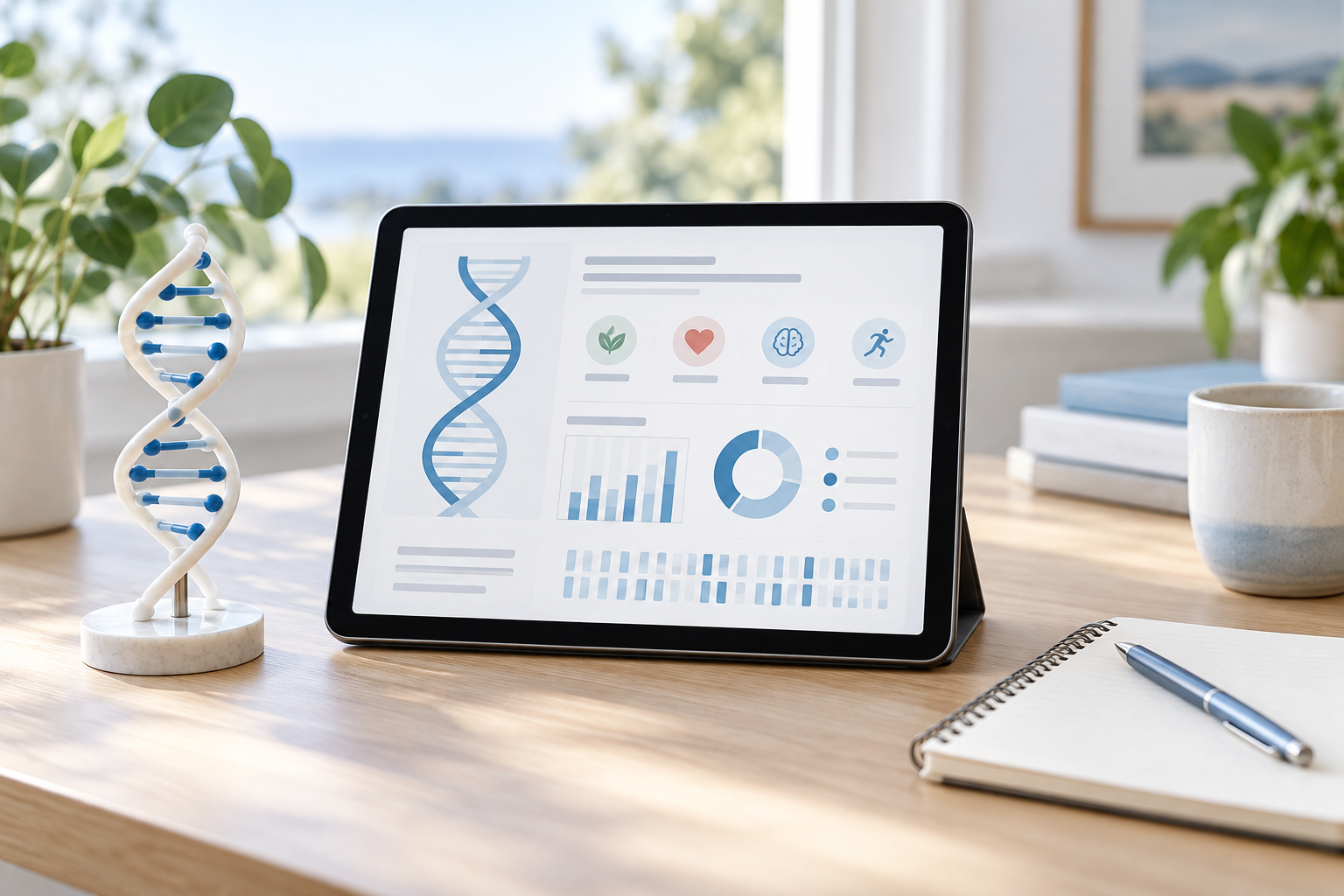
DNA Health Reports Explained: What to Know Before Buying
DNA health reports interpret genetic data to provide information about selected health risks and traits. However, a genetic predisposition does not mean you will develop a condition, and a lower-risk result does not guarantee that you will remain healthy. Lifestyle, environment, and other factors also influence health.
Before buying a DNA health report, it helps to understand what the report covers, how its findings are explained, and what happens to your genetic data. This guide walks through those questions so you can evaluate services such as SelfDecode with clearer expectations.
What Is a DNA Health Report?
A DNA health report explains selected findings from your genetic data, often focusing on health risks or traits. Depending on the service, it may use data from a new DNA test or an existing genetic data file.
The report connects genetic variants with research about particular health topics. Its scope depends on the variants analyzed and the evidence used to interpret them, so different services may provide different findings.
A consumer DNA health report is not the same as a medical diagnosis. Results that raise health concerns should be discussed with a qualified healthcare professional, who can assess whether clinical testing is appropriate.
How to Read a DNA Health Report
Start by checking what each result describes. A finding about a wellness trait is different from an estimate of disease risk. Read the explanation alongside the result rather than relying only on a color, score, or “higher risk” label.
If a report shows a risk estimate, check what it is compared with and whether it describes relative or absolute risk. Relative risk compares one group with another; absolute risk describes the likelihood of an outcome over a stated period. If the report does not explain the number clearly, ask the provider before drawing conclusions.
Next, review the evidence and limitations. Which genetic variants were analyzed? What research supports the finding? Does the report explain factors it does not measure? Consumer tests may examine only some of the variants associated with a condition, so a lower-risk result cannot rule it out.
Finally, consider the result alongside your personal and family medical history. Discuss concerning findings with a healthcare professional before using them to make medical decisions.
What a DNA Health Report Cannot Tell You
A DNA health report cannot predict your future health with certainty. Many common conditions develop through a combination of genetic, lifestyle, and environmental factors. A higher-risk finding does not mean a condition is inevitable, and a lower-risk finding does not remove the need for appropriate medical care.
A report also cannot rule out every genetic condition. The test or uploaded data may not include all relevant variants, and the interpretation may change as research develops. Check the provider’s coverage and limitations rather than assuming that a broad report is a complete assessment.
Consumer genetic findings should not be used on their own to diagnose a condition or choose treatment. If a result concerns you, a healthcare professional can help interpret it and determine whether confirmatory testing is needed.
Privacy Questions to Ask Before Buying
Before submitting a DNA sample or uploading a genetic data file, read the provider’s privacy policy and consent options. Genetic information can have implications for biological relatives as well as for you.
Check what the company stores: your physical sample, raw genetic data, report, or all three. Ask how long each is retained and whether deleting your account also deletes the data and destroys the sample.
Review whether information may be shared with laboratories, service providers, research partners, or other organizations. Check which uses require separate consent and whether you can withdraw that consent later.
Finally, look for clear instructions on downloading your data, requesting deletion, and contacting support. If a policy is unclear, ask the provider for an explanation before purchasing.
For a broader checklist on data storage, sharing, and deletion, read our guide to at-home wellness test privacy.
A Checklist Before You Buy
- Define your goal: learning about wellness traits or investigating a medical concern. For a medical concern, ask a healthcare professional which testing is appropriate.
- Check which reports are included in the specific product you plan to buy.
- Confirm whether you need a new DNA sample or can upload an existing file, and check accepted file formats.
- Review a sample report for clear explanations, research references, and limitations.
- Check the full cost, including any subscription, renewal, or optional report fees.
- Read the privacy policy, consent choices, and data deletion instructions.
- Check what support is available if you need help understanding a result.
Considering SelfDecode?
SelfDecode is one service that offers DNA health reports. Its reports bring together genetic variants relevant to selected health topics and explain how those variants may influence health. Before purchasing, check the reports included in your chosen product, the data requirements, and the current terms.
For a closer look at the service, read our SelfDecode review. Use it alongside the checklist above to decide whether the service matches your goals and expectations.
Final Takeaway
Before buying a DNA health report, check what it analyzes, how it explains findings, and how the provider handles your genetic data. Look for clear limitations and research references, and review the full cost rather than choosing by the number of reports alone.
Use the report as a starting point for learning and asking questions. If a finding raises a medical concern, discuss it with a qualified healthcare professional rather than making health decisions from the report alone.
Sources
- MedlinePlus Genetics — What should I know before proceeding with direct-to-consumer genetic testing?
- MedlinePlus Genetics — What do the results of direct-to-consumer genetic testing mean?
- MedlinePlus Genetics — What is direct-to-consumer genetic testing?
- SelfDecode — What are Health Reports?
Disclaimer: This article is for educational purposes only and does not provide medical advice, diagnosis, or treatment. Consumer DNA health reports do not replace clinical evaluation. Discuss concerning results with a qualified healthcare professional before making medical decisions.


2 Comments