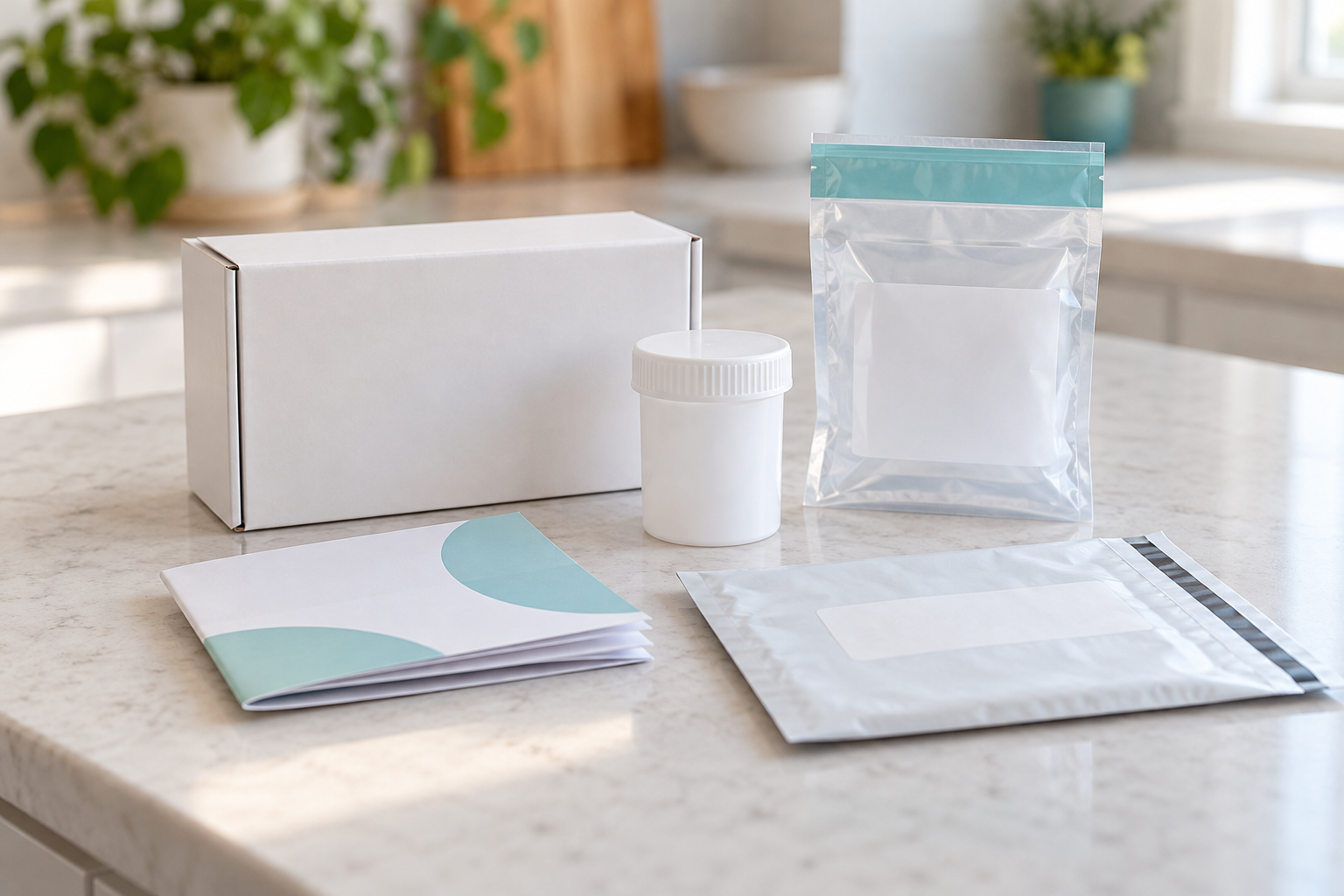
At-Home Gut Health Tests: What They Measure and What to Check Before Buying
Before buying at-home gut health tests, it helps to understand what each kit actually measures, how your sample is analyzed, and what support is available when the results arrive.
This guide explains what to check before ordering, how to compare test panels, and which questions to ask about the results. It also introduces Kihealth’s gut health options as one example, with a separate review for readers who want more product details.
This article is for educational purposes only and is not medical advice.
Quick Answer: What Is an At-Home Gut Health Test?
An at-home gut health test lets you collect a sample at home—often a stool sample—and send it to a laboratory for analysis. Depending on the panel, the report may include information about selected microorganisms, digestive markers, or markers associated with inflammation.
The term “gut health test” does not describe one standard panel. Before buying, check the exact markers included, the laboratory methods used, and whether a qualified healthcare professional can help interpret the results.
A consumer gut health report should not be used on its own to diagnose a condition or choose treatment. If you have ongoing digestive symptoms, speak with a healthcare professional about which tests are appropriate.
1. What Do At-Home Gut Health Tests Measure?
What an at-home gut health test measures depends on the specific panel. Some tests focus on selected microorganisms in a stool sample, while others also include markers related to digestion or inflammation.
For example, Kihealth lists bacterial and yeast cultures, fecal lactoferrin, and a digestive enzyme marker among its gut health analyses. Its Advanced panel also lists parasite testing and microbiome metabolites, including short-chain fatty acids. Check the current panel details before ordering, because the Basic and Advanced options have different scopes.
A longer marker list does not automatically make a test more useful for your needs. The key questions are what each marker measures, whether the method is suitable for that purpose, and how the result could inform a discussion with your healthcare professional.
2. Are All At-Home Gut Health Tests the Same?
No. “At-home” describes where you collect the sample, but it does not tell you which laboratory methods are used or what the report can explain.
When comparing kits, look beyond labels such as “basic,” “advanced,” or “comprehensive.” Check the exact markers included, how they are measured, and whether the report explains the limitations of each result.
Also check what happens after testing. Does the service provide only a report, or can a qualified healthcare professional help you interpret it? Choose a panel based on the question you want to discuss with your healthcare professional, rather than the number of markers advertised.
3. What Should You Check Before Buying a Gut Health Test?
Before ordering an at-home gut health test, check what is included in the purchase and whether the service fits your needs. Use the checklist below to compare the sample requirements, laboratory information, result support, total cost, and privacy policy. For collection preparation and return-shipping checks, read our guide to collecting a stool sample at home.
- Test panel: Which markers or organisms are included, and what does each result mean?
- Sample requirements: What sample is needed, how should it be collected, and when must it be shipped?
- Laboratory information: Which laboratory processes the sample, and what testing methods and certifications does it list?
- Eligibility: Is the service available in your state, and are there age restrictions or ordering requirements?
- Result support: Who reviews the results, and is help from a qualified healthcare professional included or available for an extra fee?
- Total cost: Does the price include return shipping, result interpretation, and any follow-up services?
- Sample problems: What is the policy if your sample is delayed, rejected, or needs to be collected again?
- Privacy: How are your sample and health data stored, shared, and deleted?
4. What Are the Limitations of At-Home Gut Health Tests?
A gut health test reports on the markers included in its panel. It does not provide a complete assessment of your digestive health or explain every possible cause of symptoms.
An out-of-range result does not establish a diagnosis on its own. Likewise, a result within the laboratory’s reference range does not rule out all digestive conditions. Interpretation may require your medical history, symptoms, medications, and other tests.
Laboratory certification and FDA clearance or approval are different things. Kihealth states that its tests are laboratory-developed tests performed in CLIA-certified laboratories and have not been cleared or approved by the FDA.
Avoid using a consumer report alone to start treatment, stop prescribed medication, or make major dietary changes. Discuss results and ongoing symptoms with a qualified healthcare professional.
Are At-Home Gut Health Tests Accurate and Worth It?
Separate two questions: can the laboratory measure the markers it lists, and will those measurements help answer your health question? Before paying, ask for evidence about the specific panel and its intended use. A detailed report or a long list of organisms does not, by itself, show that acting on the results improves health.
A 2025 international consensus statement on microbiome testing describes limited evidence for its clinical usefulness. This caution concerns microbiome profiling; it should not be confused with every targeted stool test a clinician may order.
Microbiome Profile vs. a Targeted Stool Test
Start by asking what question the test is designed to answer. Is it describing microorganisms in a sample, measuring a named digestive or inflammation-related marker, or checking for a specific suspected problem? Panels can combine different analyses, so ask for an explanation of each component rather than assuming all “gut health” results have the same clinical meaning.
For example, NIDDK explains that clinicians assess symptoms, medical history, and a physical examination when diagnosing IBS. Blood or stool tests may help check for other conditions. Buying a broad consumer panel is not a substitute for that assessment.
Questions to Ask Before Paying
Request a sample report and written answers to these questions:
- What specific question could this panel help answer, and what can it not establish?
- What method is used for each analysis, and what evidence supports its intended use?
- Who can explain an unexpected result, and is that consultation included?
- If the result is normal or abnormal, what follow-up might still be needed?
- Does the provider sell supplements recommended in its report, and can I review the results independently before buying anything?
When to Discuss Symptoms Before Ordering
If persistent bloating, diarrhea, constipation, or abdominal discomfort is your reason for testing, discuss the symptoms with a healthcare professional before selecting a panel. Seek prompt medical advice for rectal bleeding, bloody or black tarry stools, or unexplained weight loss rather than waiting for a consumer report. NIDDK identifies these as signs that may point to a condition other than IBS.
What to Do When Your Report Arrives
Keep the full laboratory report, not just a summary score. Note which markers were actually measured and write down questions about unclear findings. Ask your healthcare professional whether any result needs confirmation and whether it changes your care. Avoid automatically purchasing a supplement package or repeating the panel without a clear reason.
For Kihealth specifically, compare the current Basic and Advanced marker lists against your question using our Kihealth Review. For handling and shipping instructions, use the separate stool sample collection guide and the instructions supplied with your kit.
5. Kihealth Gut Health Tests: One Option to Explore
Kihealth offers Gut Health Basic and Gut Health Advanced tests using a stool sample collected at home. These are two options to compare using the checklist above.
Kihealth describes the Advanced panel as adding parasite and microbiome metabolite analyses to the Basic option. Before ordering, confirm the current marker list, collection instructions, availability in your state, and what support is included for interpreting results.
For an overview of the company, its test options, and important limitations, read our Kihealth Review.
Frequently Asked Questions
Is an at-home gut health test the same as a microbiome test?
Not necessarily. A microbiome test focuses on microorganisms in the sample, while a panel marketed as a “gut health test” may also include selected digestive or inflammation-related markers. The terms can overlap, so compare the actual marker list and laboratory methods rather than relying on the product name.
Is a more comprehensive gut health test always better?
Not always. A panel with more markers may provide more information, but that does not mean every result will be relevant or useful to you. Compare what the additional analyses measure, their limitations, and whether they could help answer a specific question discussed with your healthcare professional. Also consider the extra cost and the support available to interpret the results.
Can I use my gut health test results to choose supplements or treatment?
Do not use the report alone to choose supplements or treatment. A result needs to be considered alongside your symptoms, medical history, medications, and the limitations of the test. Ask a qualified healthcare professional whether any follow-up testing or treatment is appropriate before making changes.
Still deciding whether a test fits your needs? Read our guide on how to choose an at-home wellness test for a broader checklist of questions to ask before ordering.
Final Takeaway
Before buying an at-home gut health test, identify the question you want answered. Then compare the exact panel, laboratory methods, collection requirements, total cost, privacy policy, and support for interpreting results.
Kihealth’s Basic and Advanced options are examples to explore, but the right choice depends on whether the information is relevant to your needs. Use this guide alongside our Kihealth Review and discuss ongoing digestive concerns with a qualified healthcare professional.
Sources
- Kihealth — Gut Health Basic Test
- Kihealth — Gut Health Advanced Test
- CMS — Clinical Laboratory Improvement Amendments (CLIA)
- NIDDK — Diagnosis of Irritable Bowel Syndrome
Affiliate disclosure: Wellness Test Guide may earn a commission if you purchase through affiliate links on this website, at no additional cost to you. Our Kihealth Review includes affiliate links. This guide provides educational information and does not offer personalized medical advice.



3 Comments