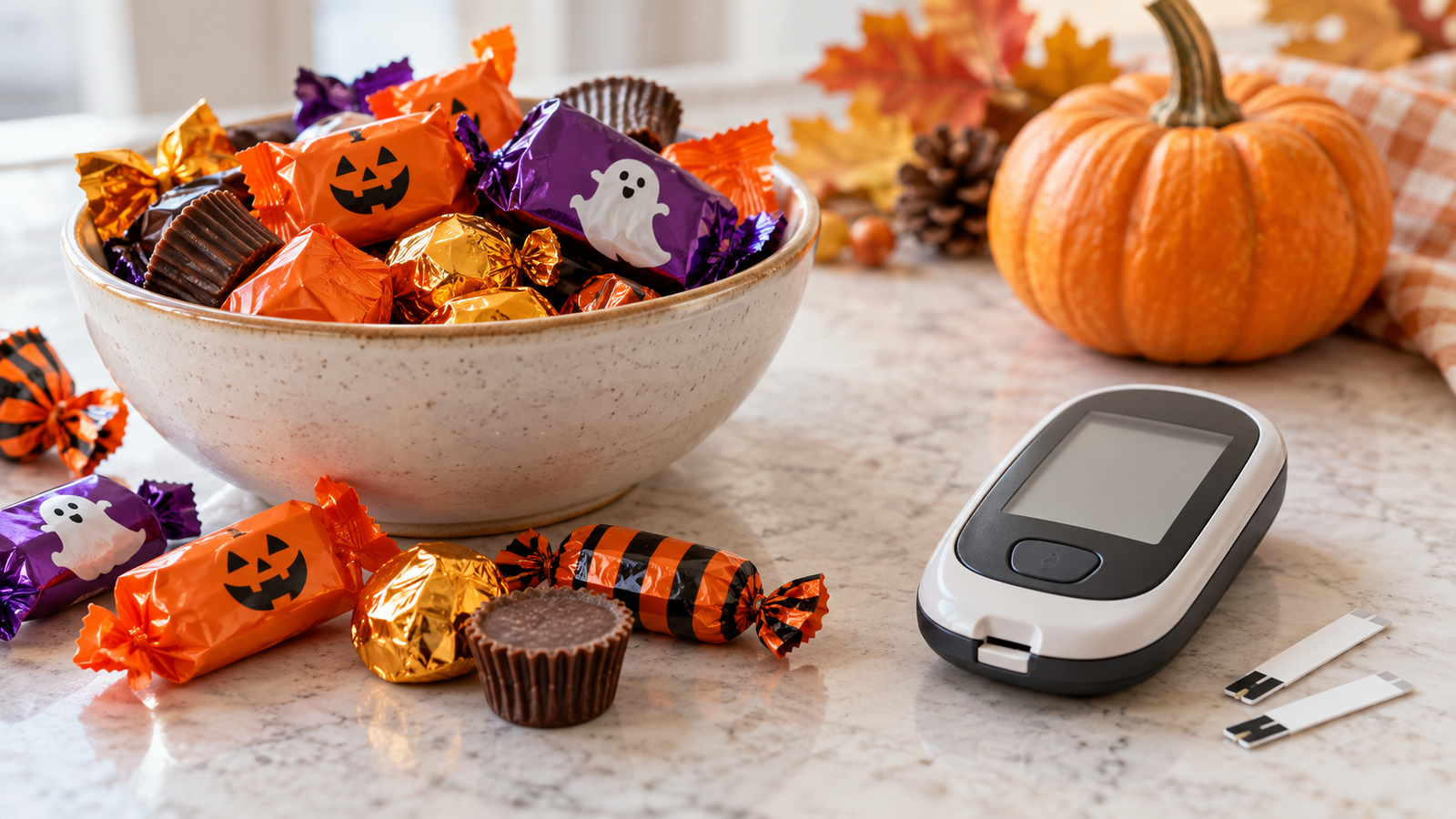
Halloween Candy and Blood Sugar: What At-Home Tests Can—and Can’t—Tell You
Quick Answer
Eating Halloween candy can affect blood sugar in the short term, but a single reading after a treat cannot tell you whether you have diabetes or prediabetes. A home glucose meter shows your glucose level at the time of testing, while an A1C test reflects your average blood sugar over roughly the past three months. If you have diabetes, follow the monitoring plan recommended by your healthcare team; if you are concerned about your risk, ask a healthcare professional which test is appropriate.
What Happens to Blood Sugar After Eating Halloween Candy?
Candy contains carbohydrates that your body breaks down into glucose. Blood sugar may rise after you eat it, but the size and timing of that change can vary with the portion eaten, other foods, activity, medication, and your individual health. One Halloween treat or one blood sugar reading does not describe your long-term health. If you already manage diabetes, use the testing and treatment plan given to you by your healthcare team.
What Can an At-Home Glucose Meter Tell You?
A home glucose meter measures your blood glucose at the time you take the test. For someone who has diabetes, readings can help them follow a monitoring plan developed with their healthcare team. Results can vary, and a meter reading on its own should not be used to diagnose diabetes or to change medication without professional guidance. Follow the device instructions carefully and speak with your healthcare team if a reading does not match how you feel.
Glucose Meter vs. A1C Test: What Is the Difference?
A glucose meter gives a reading for the moment you test. An A1C test estimates your average blood sugar over about the past three months. That means an A1C result cannot show the effect of the candy you ate on Halloween night.
For a closer look at A1C results, read our guide to at-home A1C tests and when to confirm a result.
The two tests answer different questions. If you are concerned about diabetes or prediabetes, talk with a healthcare professional about which test is appropriate and how to interpret the result. Do not use a single home meter reading to diagnose yourself.
When Might a Blood Sugar Test Be Worth Discussing?
Halloween candy alone is not a reason to assume you need a diabetes test. If you are concerned about your risk, have symptoms that worry you, or have been advised to monitor your blood sugar, speak with a healthcare professional about the next step.
Ask what the proposed test measures, whether it is intended for monitoring or diagnosis, and whether a result needs confirmation. At-home tests can provide useful information, but their results should be considered alongside your health history and professional advice.
Can Someone With Diabetes Enjoy Halloween Candy?
Yes. Having diabetes does not mean Halloween treats must be off-limits. Planning the portion, considering the carbohydrates in a treat, and following your usual diabetes care plan can help you enjoy the occasion. For children with diabetes, parents and caregivers should follow the plan agreed with the child’s diabetes care team rather than making changes based on general advice online.
If you use candy to treat low blood sugar, follow the instructions from your healthcare team. Candy chosen for that purpose should be kept separate from treats eaten for enjoyment.
Frequently Asked Questions
Can eating Halloween candy cause diabetes?
Eating candy on one occasion does not by itself tell you whether you have diabetes. Diabetes risk and diagnosis involve more than a single meal. If you are concerned about your risk, ask a healthcare professional whether testing is appropriate.
Should I check my blood sugar after eating candy?
If you already have a diabetes monitoring plan, follow the timing recommended by your healthcare team. If you do not have diabetes, a single home meter reading after candy is not a reliable way to determine whether you have diabetes.
Will an A1C test show what happened on Halloween night?
No. An A1C test reflects average blood sugar over roughly the past three months; it does not measure the effect of one evening’s treats.
The Takeaway
Enjoying Halloween candy and understanding your health can go together. A home glucose meter shows your blood sugar at the time of testing, while an A1C test provides a longer-term view. Neither a single treat nor a single home reading tells the whole story.
If you are considering an at-home wellness test, start by asking what the test measures and what you would do with the result. Our guide to choosing an at-home wellness test can help you think through those questions before you buy.
This article is for general education and does not replace medical advice, diagnosis, or treatment. For more information, read our Medical Disclaimer.
Sources and Further Reading
American Diabetes Association: How to Celebrate Halloween with a Child with Diabetes.
Centers for Disease Control and Prevention: A1C Test for Diabetes and Prediabetes.
Centers for Disease Control and Prevention: Diabetes Testing.
U.S. Food and Drug Administration: Blood Glucose Monitoring Devices.
U.S. Food and Drug Administration: Home Use Tests.


One Comment