Do You Need to Fast Before an At-Home Blood Test?
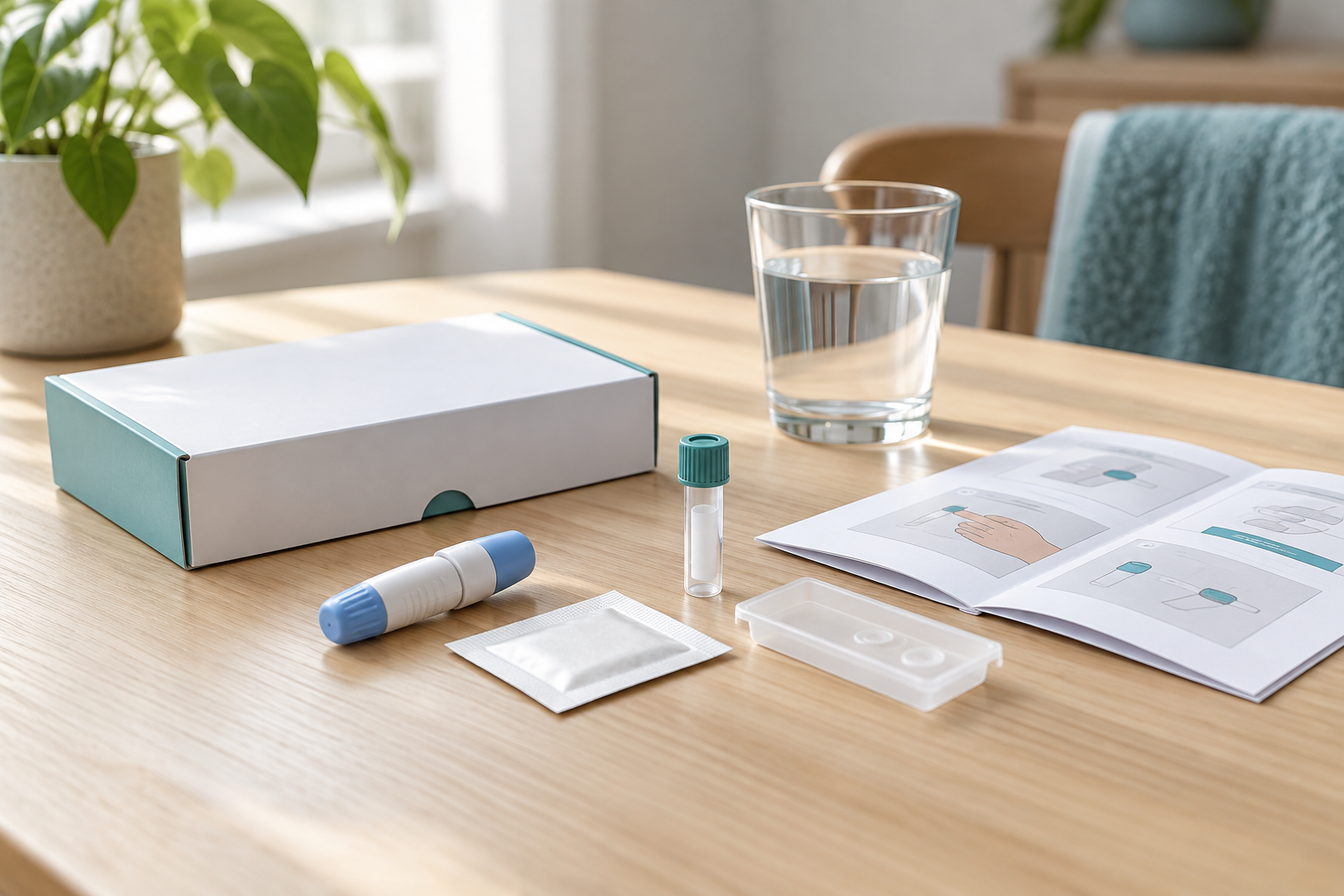
Fasting before an at-home blood test is not always required. Check the exact test name and your kit’s written instructions before collecting a sample. This guide explains what to check about fasting, water, medicines, and preparation before using your kit.
This article provides general educational information and does not replace advice from a qualified healthcare professional. Follow your kit’s instructions and ask your healthcare provider about preparation that could affect your health.
Fasting Before an At-Home Blood Test: Quick Answer
Not every at-home blood test requires fasting. Do not fast simply because a kit uses blood. If fasting is required, confirm how long to fast and what is allowed with the testing provider. If the instructions are unclear, ask before collecting your sample.
Start with the Test Name, Not the Collection Method
A finger-prick kit describes how the sample is collected; it does not tell you whether fasting is necessary. Look for the specific biomarkers included rather than relying on a broad label such as “wellness panel.”
For example, A1C and fasting glucose answer different questions. A1C reflects average blood glucose over roughly three months and does not require fasting by itself. Fasting plasma glucose requires a fasting sample. A panel containing several markers may have preparation requirements beyond those of A1C alone.
For help understanding the distinction, read our guide to at-home A1C test results.
How Long Should You Fast, and Can You Drink Water?
When fasting is required for a blood test, the usual window is 8–12 hours, but follow the exact duration your provider specifies. Plain water is generally permitted. During the fasting period, avoid coffee, juice, soda, chewing gum, smoking, and exercise.
If you eat or drink something outside the instructions, tell the testing provider before collecting your sample. They may recommend rescheduling. Do not extend the fasting window to try to get a “better” result. If instructions are missing or inconsistent, ask for clarification first.
What About Medicines and Supplements?
Give your healthcare provider a list of prescription medicines, over-the-counter products, vitamins, and supplements. Ask whether anything needs special timing. Do not stop a medicine unless your healthcare provider tells you to.
If changing meal timing affects how you take a medicine, resolve that question with your healthcare provider before planning sample collection. A general article cannot set an individual medication schedule.
A Practical Preparation Checklist
- Identify the kit. Write down its name and all included markers.
- Locate the instructions. Check the insert and the provider’s instructions for that exact product.
- Confirm preparation. Note any fasting requirement, collection time, and restrictions.
- Resolve questions. Ask about medicines or unclear wording before collection day.
- Prepare the workspace. Have the instructions and supplied materials ready.
- Record deviations. If preparation did not go as directed, tell the provider rather than guessing whether the sample is acceptable.
If the instructions are unclear, you can ask the testing provider: “Does this kit require fasting? Please confirm the duration, whether plain water is allowed, and any collection-time requirements. Who should I contact about medication timing?”
What If Your Kit Measures More Than One Marker?
Read the panel’s full preparation instructions. The fact that one marker does not require fasting does not establish the instructions for the entire panel. If the product page and kit insert disagree, contact the testing provider and ask which instructions apply to the kit you received.
When comparing products, include preparation requirements in your decision. Our guide to choosing an at-home wellness test covers the broader buying checklist.
Frequently Asked Questions
Does an At-Home A1C Test Require Fasting?
A1C itself does not require fasting. Check whether your kit includes additional tests and follow its collection instructions. A1C is different from a fasting glucose measurement.
Should I Fast If the Instructions Do Not Mention It?
Do not assume fasting is necessary. Ask the testing provider if the preparation instructions are unclear. Fasting when it has not been requested can affect some test results.
Can This Guide Replace My Kit Instructions?
No. This article helps you identify questions to ask. It does not provide a collection protocol for a particular product or determine whether a sample is suitable for analysis. Follow the instructions supplied with your kit and contact the testing provider if anything is unclear.
Final Takeaway
Fasting before an at-home blood test should follow your specific kit’s instructions; first confirm whether it is required. What does the kit measure? What preparation does it require? Who can clarify a problem? Keeping those answers with your kit makes the collection process easier to plan.
For the broader reliability issues beyond preparation, see our guide to how accurate at-home health tests are.
2 Comments