Gut Health Tests vs. FIT and Stool DNA Tests: Different Purposes Explained
Gut health tests vs. FIT and stool DNA tests: the sample may look similar, but the purpose is different. A kit that reports digestive markers or microorganisms is not automatically a colorectal cancer screening test. Before ordering, identify the question the test is designed to answer.
This guide compares purposes and follow-up. For a broader buying checklist, read our at-home gut health tests guide.
Medical disclaimer: This article provides general education, not medical advice. Ask a qualified healthcare professional which testing fits your symptoms, history, and screening needs.
Quick Answer: Are These Tests Interchangeable?
No. “Gut health test” is a broad marketing description whose contents vary by panel. FIT checks for hidden blood in stool as part of colorectal cancer screening. Multitarget stool DNA-FIT screening checks certain DNA markers as well as blood. A normal gut health report does not mean you have completed recommended colorectal cancer screening.
Gut Health Tests vs. FIT and Stool DNA Tests: Comparison
| Test type | Main focus | Key limitation |
|---|---|---|
| Gut health panel | Selected microorganisms, digestive or inflammation-related markers, depending on the panel | Not a substitute for an appropriate colorectal cancer screening test |
| FIT | Hidden blood in stool | Does not diagnose cancer; a positive screening result needs follow-up colonoscopy |
| Multitarget stool DNA-FIT | Selected DNA markers plus hidden blood | Does not diagnose cancer; a positive screening result needs follow-up colonoscopy |
1. What Is a Gut Health Test?
The exact marker list matters more than a label such as “comprehensive.” For example, Kihealth’s listed gut health analyses include bacterial and yeast cultures, fecal lactoferrin, and a digestive enzyme marker. Its Advanced option adds analyses including parasites and microbiome metabolites. Confirm the current details before ordering.
These measurements address different questions from the markers used for colorectal cancer screening. An inflammation-related marker, for example, is not the same thing as FIT or a stool DNA cancer-screening result.
Our Kihealth Review provides a separate overview of the provider and its options. It should not be used to choose a substitute for a screening test recommended by your clinician.
2. What Does FIT Look For?
FIT stands for fecal immunochemical test. It uses antibodies to detect human hemoglobin, a component of blood, in stool. Blood may be present without being visible. In a screening program, the result helps determine whether further examination is needed.
A positive result does not establish that you have cancer. It does require follow-up colonoscopy to complete the screening process. Do not assume a gut health panel or a second home screening test can replace that follow-up.
3. What Does a Stool DNA Screening Test Look For?
Multitarget stool DNA-FIT tests look for selected DNA changes in material shed into stool and also check for blood. This article uses “stool DNA” to refer to this colorectal screening category.
That is different from sequencing microbial DNA to describe microorganisms in a microbiome report. The word “DNA” alone does not tell you what a test screens for. Check its intended use.
A positive stool DNA-FIT result needs follow-up colonoscopy. A negative result does not guarantee that cancer or polyps are absent.
4. Who Should Discuss Colorectal Cancer Screening?
The U.S. Preventive Services Task Force recommends colorectal cancer screening for adults ages 45–75. Its recommendation applies to people without symptoms who are at average risk. Screening between ages 76–85 is an individual decision based on health, prior screening, and preferences.
A personal history of colorectal cancer, certain polyps, inflammatory bowel disease, or inherited cancer syndromes may require a different approach. Tell your clinician about your family history as well. Do not select a home screening kit solely from your age or an online comparison.
For people following a stool-based screening strategy, USPSTF lists annual FIT or stool DNA-FIT every one to three years. The schedule for a particular product and person should be confirmed with the clinician; these intervals do not apply to following up a positive result.
5. Symptoms Need Assessment, Not Just Routine Screening
Screening looks for disease before symptoms occur. If you notice blood in your stool, a persistent change in bowel habits, unexplained weight loss, or ongoing abdominal symptoms, speak with a healthcare professional about an evaluation.
A negative home result should not be used to dismiss symptoms. Your clinician may recommend diagnostic testing rather than a routine home screening pathway.
6. Collection Instructions Are Not the Same for Every Kit
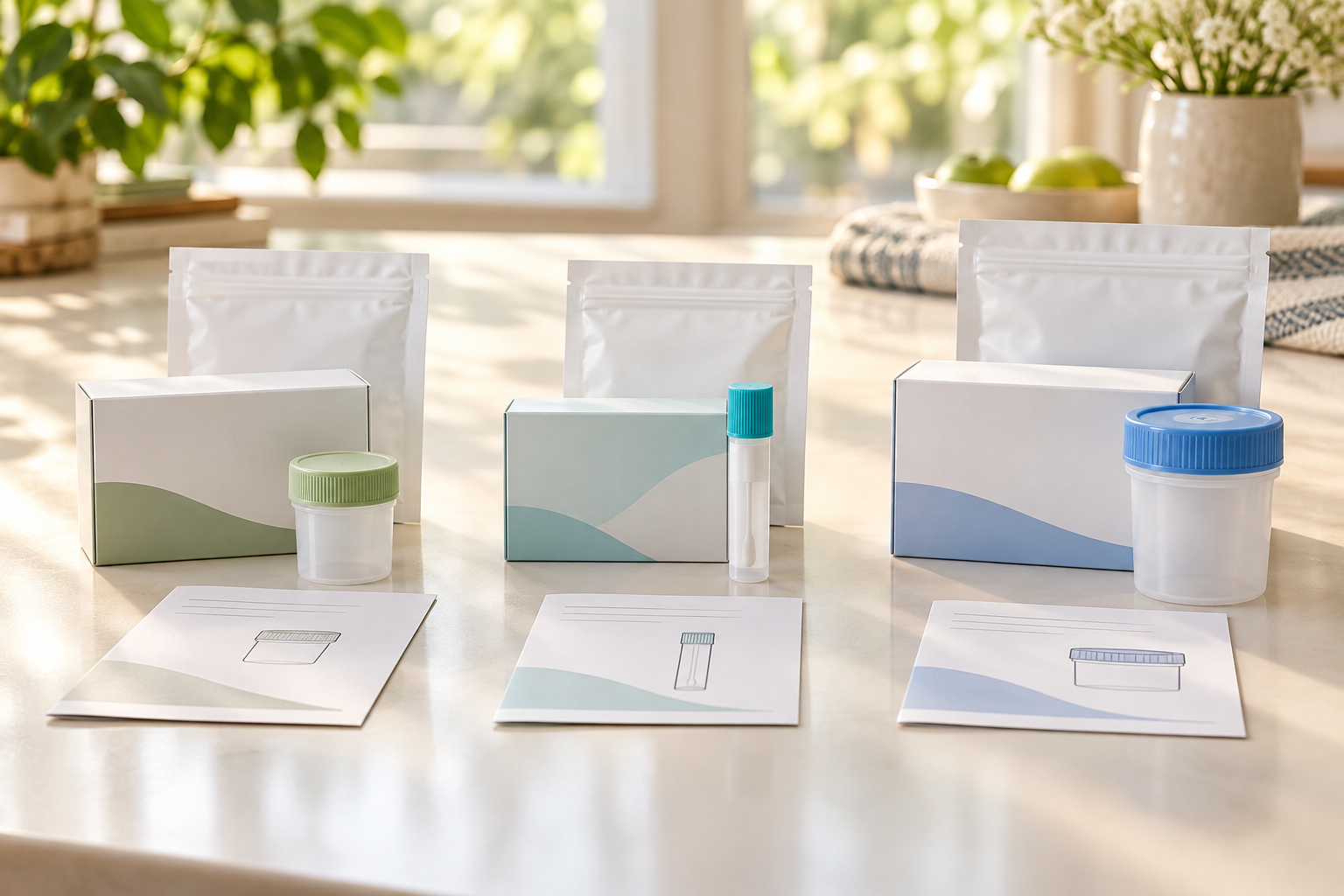
Do not transfer a sample between kits or assume one collection can serve several tests. Each kit has its own container, sample amount, labeling, storage, and return instructions.
For general preparation questions, see our stool sample collection guide, then follow the instructions supplied with the exact test you are using. Ask the provider before collecting if you are unsure.
Questions to Ask Before Choosing a Stool Test
- Is the purpose colorectal cancer screening, investigation of symptoms, or information about selected gut markers?
- Am I eligible for this specific test given my symptoms and history?
- What does a positive or negative result mean for the next step?
- Who will contact me and arrange any required follow-up?
- What costs apply to the kit, processing, and follow-up care?
- Which collection and shipping instructions apply to this kit?
Frequently Asked Questions
Can a normal Kihealth gut health result replace FIT?
No. The gut health panels discussed here are different from FIT-based colorectal cancer screening. Continue the screening plan agreed with your healthcare professional.
Does a positive FIT or stool DNA result mean cancer?
No. A positive screening result is a reason for follow-up colonoscopy, not a confirmed cancer diagnosis.
Can I repeat a stool test instead of arranging a colonoscopy after a positive result?
Do not use a repeat home test to cancel the recommended follow-up. Contact your healthcare professional to arrange colonoscopy and discuss any barriers.
Should I buy all three types of tests?
This comparison is not a recommendation to purchase all three. Start with the question you need answered and ask which test, if any, is appropriate.
Final Takeaway
Similar collection methods do not mean similar purposes. FIT and stool DNA-FIT belong to colorectal cancer screening strategies; gut health panels report different information. Understand the intended use and follow-up before collecting a sample.
Continue with our gut health test guide for panel comparisons, or Kihealth Review for provider information. Neither replaces a discussion about colorectal cancer screening or persistent symptoms.
Sources
- USPSTF — Colorectal Cancer: Screening
- National Cancer Institute — Screening Tests to Detect Colorectal Cancer and Polyps
- MedlinePlus — Colorectal Cancer Screening Tests
- Kihealth — Gut Health Basic Test
- Kihealth — Gut Health Advanced Test
Affiliate disclosure: Our Kihealth Review contains affiliate links. Wellness Test Guide may earn a commission from qualifying purchases through affiliate links, at no additional cost to you.