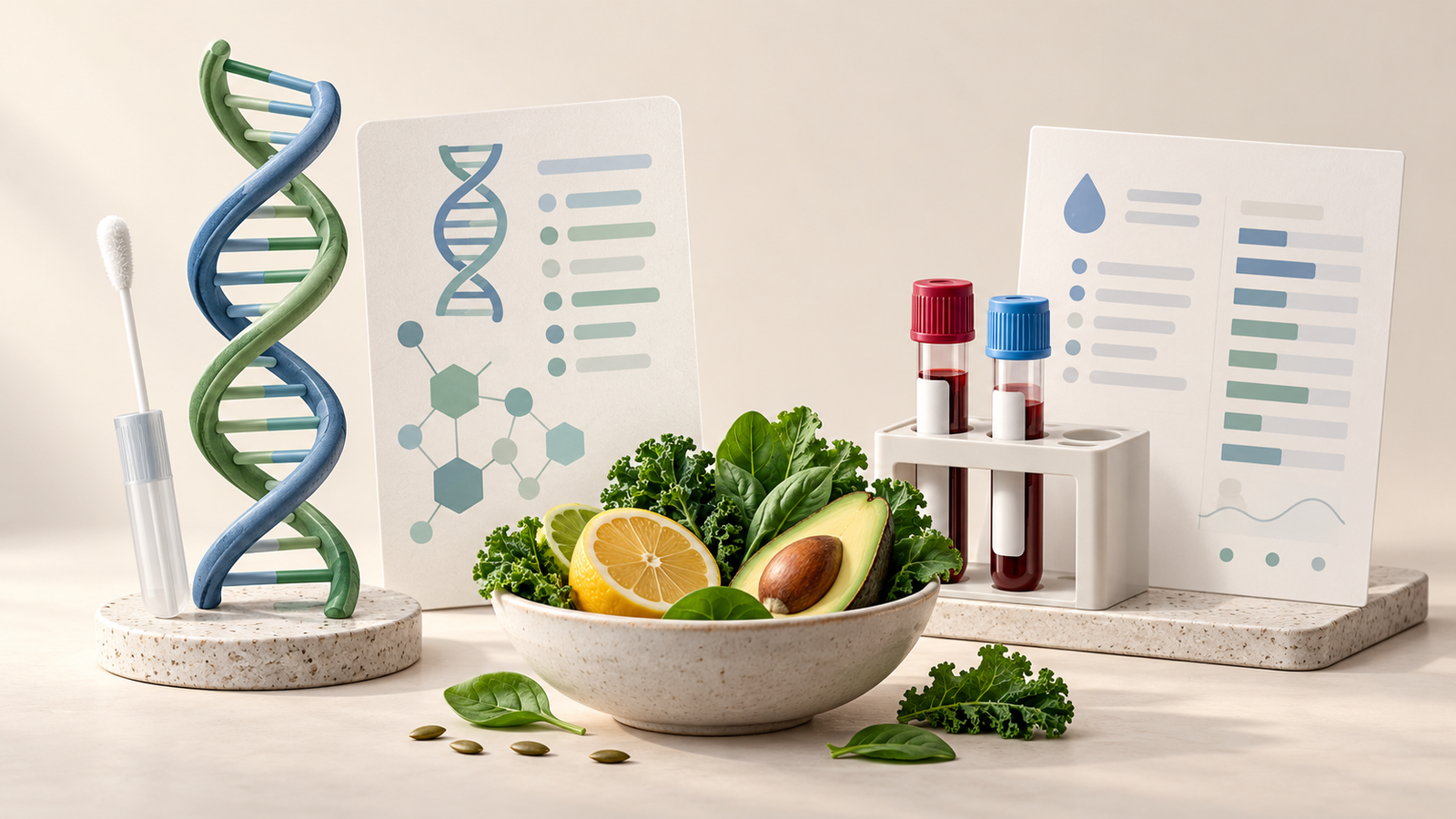
DNA Nutrition Reports vs. Blood Nutrient Tests: What’s the Difference?
DNA nutrition reports vs blood tests: both may discuss vitamins and diet, but they provide different information. Before choosing either, decide whether you want to explore inherited traits or investigate your current nutrient status. For the blood-testing route, compare our guide to focused vitamin tests with our guide to micronutrient panels and their limitations.
Medical disclaimer: Educational information only. This comparison does not diagnose a deficiency or provide a personalized diet or supplement plan. Product discussion is based on published information, not a hands-on test.
Affiliate disclosure: This article contains an affiliate link. We may earn a commission from qualifying purchases at no additional cost to you.
Quick Answer
A DNA nutrition report interprets genetic variants associated with nutrition-related traits. A blood nutrient test measures selected nutrients or related biomarkers in a blood sample. A genetic tendency is not a measured deficiency, and a blood result needs clinical context. Neither type of report should be used alone to choose treatment.
1. What Does a DNA Nutrition Report Tell You?
These reports connect selected genetic variants with research about nutrition-related traits. Their scope depends on the variants covered, the data source, and the interpretation method. For a general explanation of scores and limitations, read our DNA health reports guide.
Genes are only part of the picture. Lifestyle and environmental factors also matter, and consumer genetic testing may cover only some relevant variants. A reassuring result cannot rule out a health problem. MedlinePlus explains these limitations.
2. What Does a Blood Nutrient Test Tell You?
A blood panel reports the specific biomarkers it measures. For example, most vitamin D blood tests measure 25-hydroxyvitamin D, commonly written as 25(OH)D. Routine vitamin D testing is not recommended for everyone; a healthcare professional can advise whether it is appropriate. See MedlinePlus’s vitamin D testing explanation.
Biomarker selection matters. NIH describes serum or plasma vitamin B12 testing and the use of methylmalonic acid to help assess some results; kidney function can complicate interpretation. This illustrates why a panel name alone does not establish what a result means. NIH’s vitamin B12 fact sheet provides details.
For marker lists, collection methods, and panel limitations, use our at-home micronutrient testing guide. This article focuses on the difference between genetic interpretation and biomarker measurement.
3. Why Can DNA and Blood Results Look Different?
Imagine a DNA report flags a vitamin-related tendency while a blood test shows a result within its reference range. These findings do not automatically contradict each other: one is an interpretation of inherited information, while the other is a measurement from a sample. They are not interchangeable scales.
The reverse also matters. A reassuring genetic report does not cancel an abnormal laboratory result. Bring the complete reports to a qualified healthcare professional instead of using one to dismiss the other. Do not assume that buying another consumer report will explain the discrepancy.
4. Match the Information to Your Question
“I want to explore nutrition-related genetic traits.”
Compare sample reports, evidence, variant coverage, and privacy terms. Ask what the report can establish and what requires clinical confirmation. Consider whether the information is useful enough to justify the total cost.
“I am concerned about a current deficiency.”
Start with a discussion of your concern and health history. Ask whether testing is needed and which biomarker would answer the question. A broad panel or DNA report is not automatically the appropriate next step.
“I want to check whether my treatment is working.”
Follow the monitoring plan agreed with your care team. Do not use a consumer genetic score to judge whether a measured deficiency has resolved or to change prescribed treatment.
5. Where SelfDecode Diet & Nutrition Fits
SelfDecode’s Diet & Nutrition report is an example of genetic reporting. Its listed topics include vitamins, minerals, dietary fats, and eating habits. It does not measure current blood nutrient concentrations.
The product page states that a SelfDecode DNA kit is required to generate the report. Check whether the kit is included, which reports your purchase unlocks, any membership terms, and the final checkout total. For features and privacy questions, read our SelfDecode Review.
You do not need to purchase this service to use the comparison in this article. A report containing dietary or supplement suggestions does not by itself establish that those suggestions will improve your health.
6. Questions to Check Before Paying
Purpose: What exact question will this purchase answer? Evidence: Does the provider explain the limitations and supporting research? Cost: Are the kit, reports, shipping, interpretation, and renewals included?
Data: What happens to the physical sample and digital results? Support: Who can explain an unexpected finding? Use our wellness test privacy checklist before submitting a sample or uploading genetic data.
Frequently Asked Questions
Can a DNA nutrition report diagnose a vitamin deficiency?
It does not measure your current nutrient concentration. A genetic tendency should not be treated as a confirmed deficiency; ask a healthcare professional about appropriate assessment.
Should I buy both a DNA report and a blood panel?
Not automatically. Define the question first, then consider whether either purchase provides useful information. More reports do not necessarily resolve uncertainty.
Can I choose supplement doses from a DNA report?
Do not use a consumer DNA report alone to select a dose. Review recommendations with a qualified healthcare professional, particularly if you take medicines or already receive treatment.
Final Takeaway
Choose by the information you need: inherited nutrition-related traits and measured blood biomarkers answer different questions. Check evidence, total cost, privacy, and follow-up before buying. If your concern is a current deficiency or symptoms, seek an appropriate clinical assessment.
Sources
MedlinePlus Genetics — Benefits and Limitations of Consumer Genetic Testing
MedlinePlus — Vitamin D Test
NIH Office of Dietary Supplements — Vitamin B12
SelfDecode — Diet & Nutrition Product Information




One Comment