At-Home Cholesterol Tests: What to Check Before Buying
At-home cholesterol tests can make sample collection more convenient, but not every kit gives the same information. Before buying, check the exact markers, how the sample is processed, and who can help you understand the report.
This guide explains what to compare without ranking brands or assuming a home kit replaces testing recommended by your healthcare professional.
Medical disclaimer: General educational information only. Discuss test selection and results with a qualified healthcare professional. Do not start, stop, or change prescribed treatment based on a home result alone.
Quick Answer: What Should You Check First?
Start with the marker list. A total-cholesterol-only test is not the same as a lipid panel that also reports HDL, LDL, and triglycerides. Then check whether you read the result at home or mail a sample to a laboratory, what preparation is required, and how follow-up works.
1. Total Cholesterol vs. a Lipid Panel
A total cholesterol result combines information about different cholesterol-containing particles into one number. A lipid panel provides more detail. Ask which individual results appear on the report rather than relying on the phrase “heart health test.”
| Reported item | What to check before buying |
|---|---|
| Total cholesterol | Is this the only measurement included? |
| HDL cholesterol | Is an individual HDL result reported? |
| LDL cholesterol | Is LDL reported, and is it measured directly or calculated? |
| Triglycerides | Are these included, and what preparation applies? |
| Non-HDL cholesterol | Is this calculated value shown or explained? |
LDL is associated with plaque buildup in arteries. HDL helps transport cholesterol away, and triglycerides are another type of blood fat. The importance of each result depends on the wider clinical picture, not just whether an app marks it green or red.
2. Check Where the Result Is Produced
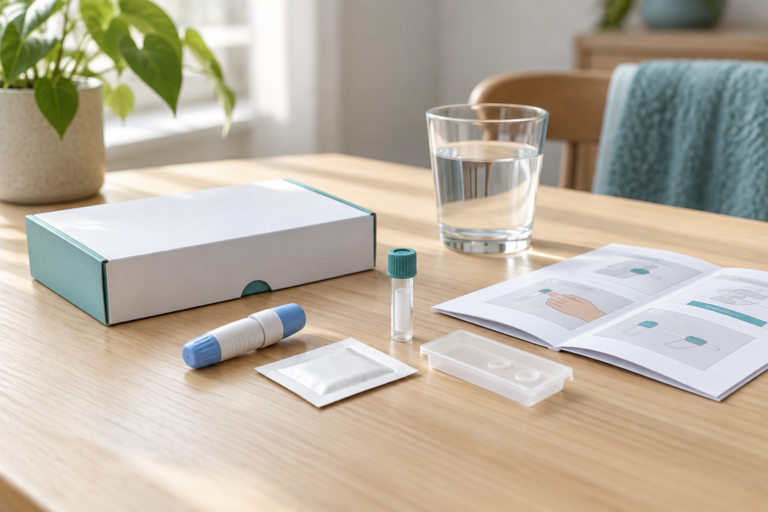
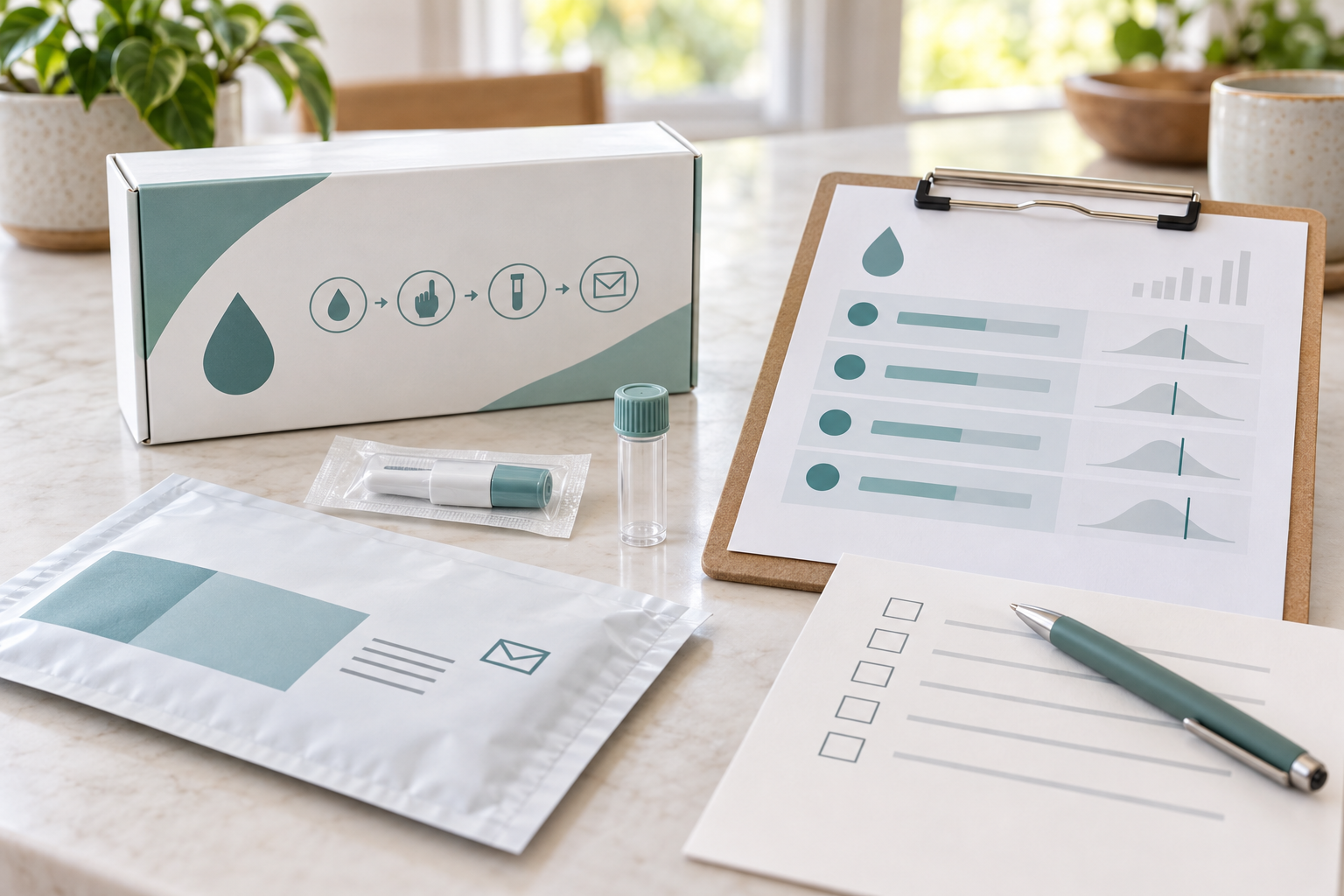
“At-home” can describe the collection location or the entire testing process. A self-read kit may use a strip or a small analyzer. A mail-in service sends your sample to a laboratory. Read the actual instructions to understand which process you are buying.
For a self-read kit, check compatible supplies, storage, expiration, and the reading procedure. For a mail-in kit, ask which laboratory processes the sample, how it must be returned, and when turnaround starts.
For a wider explanation of these arrangements, see our at-home wellness tests vs. lab tests guide.
3. Ask About Accuracy for the Specific Product
FDA notes that home cholesterol tests vary in accuracy between brands and that following instructions matters. Read the product’s accuracy information rather than treating a general statement about home testing as proof about one kit.
- Is this exact product intended for consumer home use?
- Which markers were evaluated, and what accuracy information is available?
- What collection mistakes can invalidate a result?
- What happens if a sample is too small or cannot be processed?
- When does the provider recommend confirmation through a healthcare professional?
For mail-in testing, ask about laboratory credentials and the specific method used. Laboratory certification and evidence about a particular test are different questions; ask for a clear answer to each.
4. Confirm Whether You Need to Fast
Do not assume every cholesterol test has the same fasting requirement. Ask your provider whether fasting is needed for your specific panel, and follow the kit’s instructions. If the instructions conflict, clarify before collecting.
When fasting is requested, ask how long it should last, what you may drink, and whether your usual medicines can be taken. Do not stop medication on your own. Our fasting before an at-home blood test guide covers preparation questions in more detail.
5. Compare the Complete Cost
Separate the advertised kit price from the total cost of obtaining and discussing a usable result. Ask the provider to clarify the following before checkout:
- Are shipping, return packaging, and laboratory processing included?
- Is result interpretation included, or does it cost extra?
- For a reusable analyzer, what do replacement strips and collection supplies cost?
- What is the policy for rejected samples or failed tests?
- Does the purchase start a subscription or automatic renewal?
- What refund or cancellation terms apply?
If you plan to use insurance or a health spending account, confirm coverage or eligibility directly with the relevant plan. A checkout payment option does not answer every reimbursement question.
6. Decide Who Will Review the Report
CDC explains that cholesterol results are part of assessing cardiovascular risk. Other factors, such as blood pressure, diabetes, smoking, and family history, also matter. A cholesterol result alone does not describe your entire heart health.
Share unexpected results with your healthcare professional. They can decide whether another lipid test is needed and explain what the findings mean for your care. A result within the report’s reference range does not replace an existing follow-up plan.
Keep the full report, collection date, preparation details, and information about the test used. Our guide to understanding wellness test results offers a general framework for organizing questions.
7. Check Privacy and Access Before Ordering
Ask how you will receive the report, whether you can download it, and how to share it securely with your clinician. Review the provider’s policies on storing samples and health information, sharing data, and requesting deletion.
For a practical checklist, see our at-home wellness test privacy guide.
Kihealth Optimal Health Test: One Panel to Compare
If you are comparing mail-in blood testing options, Kihealth’s Optimal Health Test is one panel to research. The official product page lists total cholesterol, HDL, LDL, triglycerides, and ApoB among the markers described. Kihealth describes finger-stick blood collection at home, laboratory processing, and online results.
The summary and detailed marker lists on that page are not identical. Before ordering, confirm exactly which results are included, whether LDL is measured or calculated, the preparation requirements, state availability, and interpretation support. A broader panel is not automatically more useful than the testing your healthcare professional recommends.
Read our Kihealth Review for a provider overview. Kihealth states that its tests are laboratory-developed tests performed in CLIA-certified laboratories and have not been cleared or approved by the FDA. Discuss whether the panel fits your needs with a qualified healthcare professional.
Affiliate disclosure: Our Kihealth and SelfDecode reviews contain affiliate links. We may earn a commission from qualifying purchases through those links, at no additional cost to you.
Genetic Risk Reports Are Different From Cholesterol Blood Tests
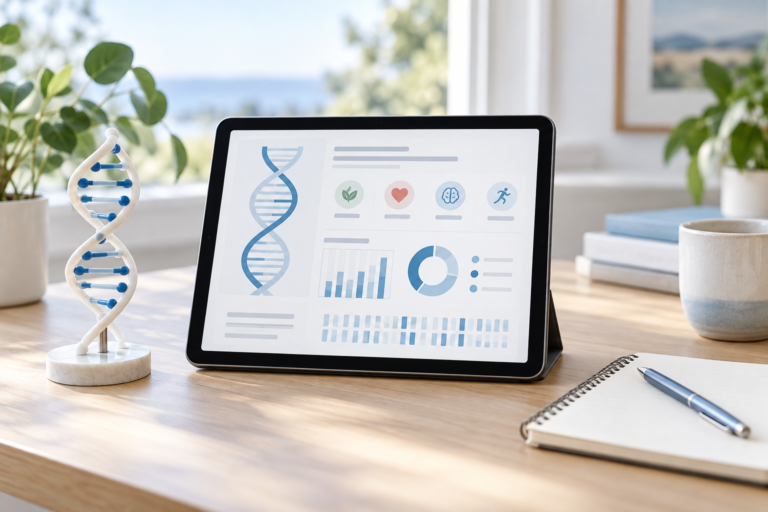
A DNA-based health report and a lipid panel answer different questions. Genetic reports explore inherited tendencies, while a blood lipid test measures cholesterol and other lipids in your sample. A genetic risk estimate cannot tell you your current LDL, HDL, or triglyceride level.
SelfDecode offers DNA reports related to LDL and total cholesterol. If you want to understand this separate type of information, read our SelfDecode Review. These reports do not replace a lipid panel, and a lower genetic risk estimate is not a reason to skip blood testing recommended by your healthcare professional.
Consumer genetic risk reporting should also be distinguished from a clinical evaluation for familial hypercholesterolemia (FH). The CDC explains that a healthcare professional may recommend genetic counseling and testing when blood cholesterol levels, family history, and physical findings suggest FH. Do not use a consumer report alone to confirm or rule out this condition.
Frequently Asked Questions
Can an at-home cholesterol test replace a full lipid panel?
A total-cholesterol-only test cannot provide all the individual results in a lipid panel. Whether a particular home panel fits your needs depends on what it reports and what your healthcare professional has requested.
Will I feel symptoms if my cholesterol is high?
High cholesterol usually has no symptoms. Testing, rather than how you feel, is used to find it. Ask your healthcare professional when testing is appropriate for your age and risk factors.
Should I test every month?
Do not assume monthly testing is necessary. Ask your healthcare professional what interval fits your risk factors, prior results, and any treatment plan.
Can I compare results from two different kits?
Keep the marker names, units, collection conditions, and test methods with each report. Ask your healthcare professional whether the results are comparable before interpreting a difference as a health change.
Do urine wellness strips or DNA reports measure blood cholesterol?
A urine wellness reading or genetic health report is not a blood lipid measurement. Check the actual sample and marker list rather than assuming all products marketed for wellness provide equivalent information.
Final Takeaway
Choose at-home cholesterol tests by the information they provide and the follow-up you need. Confirm the marker list, testing process, preparation, accuracy information, complete cost, and access to interpretation before purchasing.
If you are still comparing formats, start with our at-home wellness test buying checklist. Bring specific cholesterol concerns to your healthcare professional rather than choosing a kit only from its price or marketing label.