At-Home A1C Tests: What Your Results Mean and When to Confirm Them
Quick Answer
An A1C test estimates your average blood sugar level over the past two to three months. An at-home A1C kit can help you monitor that number, but a home result alone should not be used to diagnose prediabetes or diabetes. If your result is outside the expected range, or does not match how you feel, discuss it with a healthcare professional and ask whether a laboratory test is needed.
What Does an A1C Test Measure?
A1C, also called HbA1c, measures the percentage of hemoglobin in your red blood cells that has glucose attached to it. The result reflects your average blood sugar level over roughly the past two to three months. Unlike a finger-stick glucose reading, it does not show your blood sugar at the exact moment you take the test.
Wondering whether Halloween candy changes an A1C result? Read our guide to Halloween candy, blood sugar, and what at-home tests can tell you.
How Do At-Home A1C Tests Work?
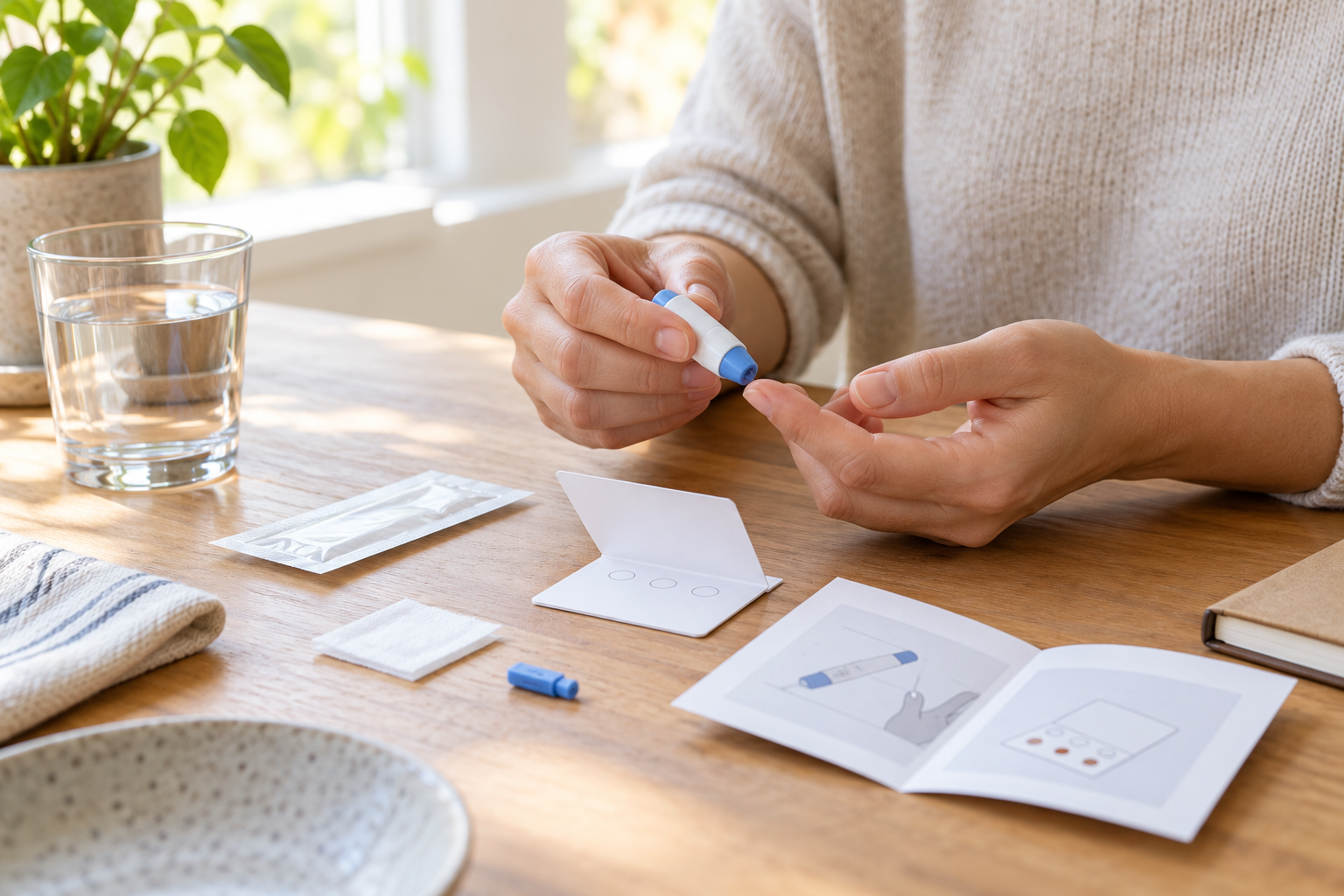
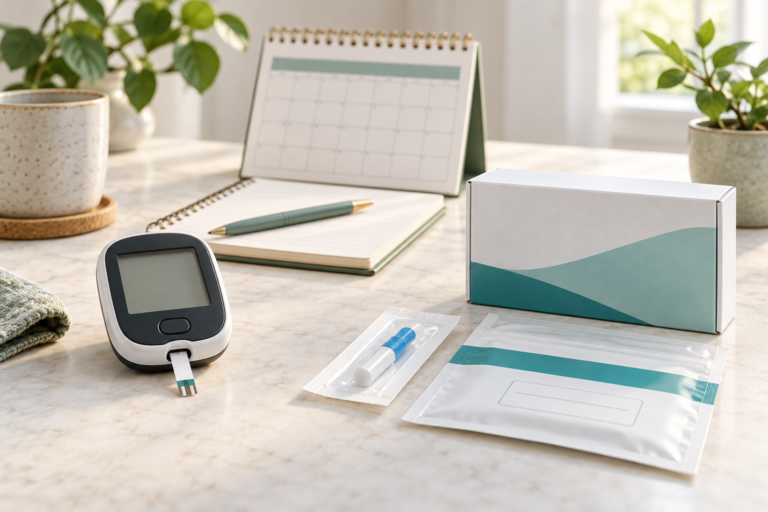
Most at-home A1C tests use a small blood sample collected with a finger prick. Depending on the kit, you may place the sample into a device that displays a result at home or mail it to a laboratory for analysis. The collection steps, turnaround time, and instructions vary by product, so check the specific kit before buying or using it.
A home A1C result can be useful for tracking changes over time. Keep a record of the result and the date of the test so you can discuss it with your healthcare professional.
How to Read an A1C Result
Healthcare professionals commonly use these A1C ranges when interpreting a laboratory test:
| A1C result | General range |
|---|---|
| Below 5.7% | Normal |
| 5.7% to 6.4% | Prediabetes |
| 6.5% or higher | Diabetes |
These ranges provide context, but do not use an at-home result alone to diagnose yourself. A healthcare professional can assess your result, health history, and whether another test is needed. The target A1C for someone already living with diabetes is a separate, individual decision made with their care team.
When Should You Confirm a Home A1C Result?
Contact a healthcare professional if your at-home result falls in the prediabetes or diabetes range, differs substantially from an earlier result, or does not seem to match other blood sugar readings. They can advise whether you need a laboratory A1C test or another type of blood sugar test.
Even when a result falls below 5.7%, speak with a healthcare professional if you have symptoms or concerns about diabetes. A single A1C result does not tell the whole story, and some health conditions can affect how accurately A1C reflects your blood sugar.
What Can Affect the Accuracy of an A1C Result?
A1C depends partly on the lifespan of your red blood cells. Recent blood loss or a transfusion, iron-deficiency anemia, kidney disease, and certain inherited hemoglobin variants can make a result harder to interpret. Some A1C testing methods may be affected more than others.
Tell your healthcare professional about relevant health conditions, recent treatments, and any mismatch between your A1C result and other blood sugar readings. They can decide whether to repeat the test or use a different test.
At-Home A1C Test or Laboratory Test?
An at-home test may be convenient if you want to track your A1C between healthcare visits. Before choosing a kit, check whether it gives a result at home or requires mailing a sample, how long results take, and what follow-up support is available.
If you are seeking a diagnosis, have symptoms, or receive a result that concerns you, contact a healthcare professional about laboratory testing. A home kit does not replace a clinical evaluation. If you are already being treated for diabetes, ask your care team how often to check A1C and which testing method fits your care plan.
Frequently Asked Questions
Do I need to fast before an A1C test?
No. An A1C test does not usually require fasting. Follow any additional instructions provided with your test kit or by your healthcare professional.
Is A1C the same as a finger-stick blood sugar reading?
No. A finger-stick glucose test measures blood sugar at that moment. A1C reflects an average over roughly two to three months, so it may not show short-term changes.
Can an at-home A1C result diagnose diabetes?
Do not use an at-home result alone to diagnose diabetes. If your result is in the diabetes range, discuss appropriate laboratory testing and confirmation with a healthcare professional.
What if my A1C result does not match my glucose readings?
Tell your healthcare professional. A1C and glucose tests measure different things, and certain health conditions can also affect A1C. Your care team can decide whether another test is needed.
The Bottom Line
An at-home A1C test can offer a convenient way to check a longer-term blood sugar measure. The most useful next step depends on why you tested and what the result shows. Keep your result, note the test date, and speak with a healthcare professional if you need help interpreting it or deciding whether to confirm it with laboratory testing.
If you are comparing testing options, read our guide to choosing an at-home wellness test. You can also explore our review of Kihealth to learn about one provider’s approach before deciding whether its tests fit your needs.
Sources and Further Reading
- Centers for Disease Control and Prevention (CDC). “A1C Test for Diabetes and Prediabetes.”
- National Institute of Diabetes and Digestive and Kidney Diseases (NIDDK). “The A1C Test & Diabetes.”
- American Diabetes Association. “Understanding A1C: What It Measures and Why It Matters.”
Medical disclaimer: This article is for general educational purposes only and does not provide medical advice, diagnosis, or treatment. If you have questions about an A1C result or symptoms of diabetes, speak with a qualified healthcare professional.
3 Comments