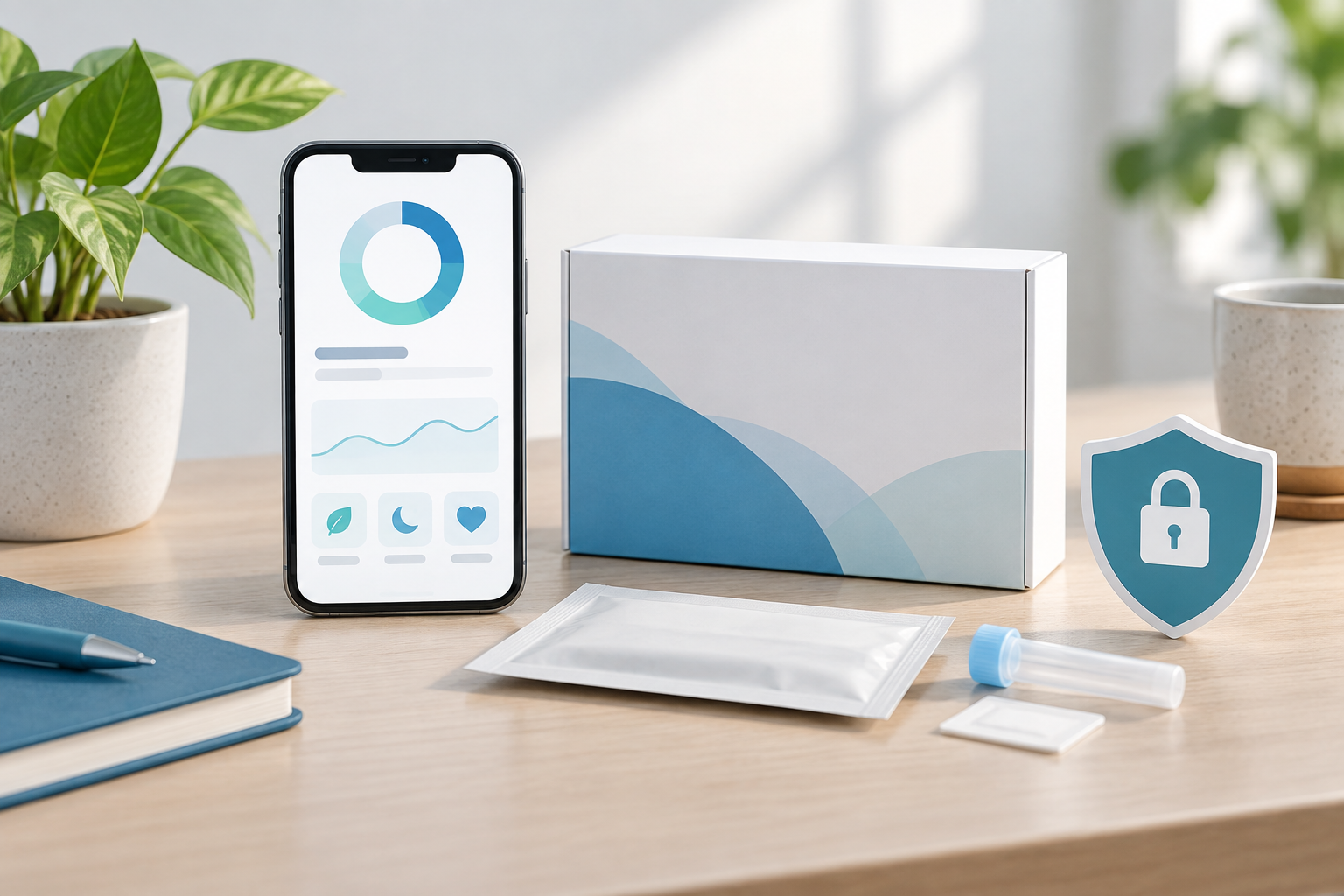
At-Home Wellness Test Privacy: 8 Questions to Ask Before You Buy
Last updated: September 2026
Researched and reviewed by the Wellness Test Guide Editorial Team.
An at-home wellness test may involve more than the sample you collect. Depending on the product, you might create an account, answer a questionnaire, scan a test strip with a phone, or store results in an app. These steps can involve information you would rather keep private.
Privacy policies differ between providers. The questions below can help you investigate a product’s practices before buying it. They do not establish that a particular company shares, sells, or protects your data in any specific way.
1. What Information Does the Product Ask You to Provide?
List the information needed to purchase and use the test. This may include contact details, account information, questionnaire answers, images of a test strip, or test results. Check which fields are required and which are optional. If a product uses an app, look at both the company website and the app’s privacy information.
Ask yourself whether every requested detail is necessary for what you want to learn. A product that asks for a sample and a product that asks for a sample plus a detailed questionnaire may create different privacy decisions.
2. Why Is Each Type of Information Collected?
Read the current privacy policy for explanations of how information is used: to process a test, display results, provide customer support, personalize content, improve a service, or market products. Look for separate explanations of test data, account details, website activity, and app activity. If the language is unclear, contact customer support before entering sensitive information.
The Federal Trade Commission’s consumer guide to health apps recommends asking why an app collects information and how it shares that information.
3. Who May Receive Your Information?
Check whether the policy describes sharing with laboratories, service providers, analytics partners, advertisers, research partners, or other third parties. Sharing information to process a test is different from using information for advertising. Find out whether the policy distinguishes these uses and whether you can control them.
Do not assume that an affiliate link on this website tells you anything about a testing provider’s data practices. The provider’s own privacy policy is the place to check its current commitments.
4. Does the App Need Permissions You Can Limit?
A phone-based test may need camera access to scan a strip, for example. Review the permissions requested by the specific app and consider whether each one is needed for the feature you plan to use. Check the device settings and the app’s own controls to see which permissions or sharing options you can change. Available controls vary by app and device.
5. How Are Results Stored, Accessed, and Deleted?
Look for answers to practical questions: Will results stay in your account? Can you download them? Can you delete a result or close the account? What happens to stored data after account closure? Does the policy explain retention periods or exceptions?
If you decide to contact support, ask for the applicable policy section or an explanation in writing. Keep in mind that deleting an app from your phone may not delete data already held by the provider.
Considering a DNA testing service? Our guide to DNA health reports explains what to check about genetic data, sample retention, and deletion before buying.
6. What Happens When You Share a Result?
Before sending a report or screenshot to another person, check whether it contains your name, date of birth, account details, test date, or other information you did not intend to disclose. A useful result can still reveal personal details. Save downloaded reports in a location you control, and use your own judgment about who needs access.
7. Is the Service Covered by the Privacy Rules You Assume Apply?
A wellness app is not automatically subject to the same privacy rules as a healthcare provider. For U.S. users, the U.S. Department of Health and Human Services explains that HIPAA generally does not protect information entered into a personal-use app unless the app is provided by a covered entity or its business associate. This is general context, not a determination about any specific test or app. Review the provider’s actual policy and ask questions if legal protections matter to your decision.
8. Can You Explain the Trade-Off Before Buying?
Write down what you gain from the test and what information you would provide in return. If the company gives clear answers about collection, sharing, controls, and deletion, you can make a more informed choice. If you cannot find those answers, consider contacting the company or choosing a product with clearer information.
Privacy is one factor alongside the test’s purpose, sample type, cost, and limitations. Our beginner’s guide to choosing an at-home wellness test covers those broader decisions. For an example of how a particular urine-strip product works and what it measures, see the VIVOO review. The review is about product features; check VIVOO’s current privacy documents directly before making a data-sharing decision.
Quick Privacy Checklist
- What personal, sample, and result information is collected?
- What is required, and what can I skip?
- How is each type of information used?
- Which third parties may receive it, and for what reasons?
- What app permissions and sharing choices can I control?
- Can I download or delete results and close my account?
- What personal information appears in a report or screenshot?
- Where can I ask the provider for a clear answer?
Final Thoughts
A convenient at-home test is more useful when you also understand what happens to the information you provide. Read the provider’s current privacy policy, compare its answers with your comfort level, and ask questions before submitting sensitive details. Test results should also be understood in context; a wellness product is not a substitute for professional medical advice, diagnosis, or treatment. See our medical disclaimer for the site’s educational scope.
3 Comments