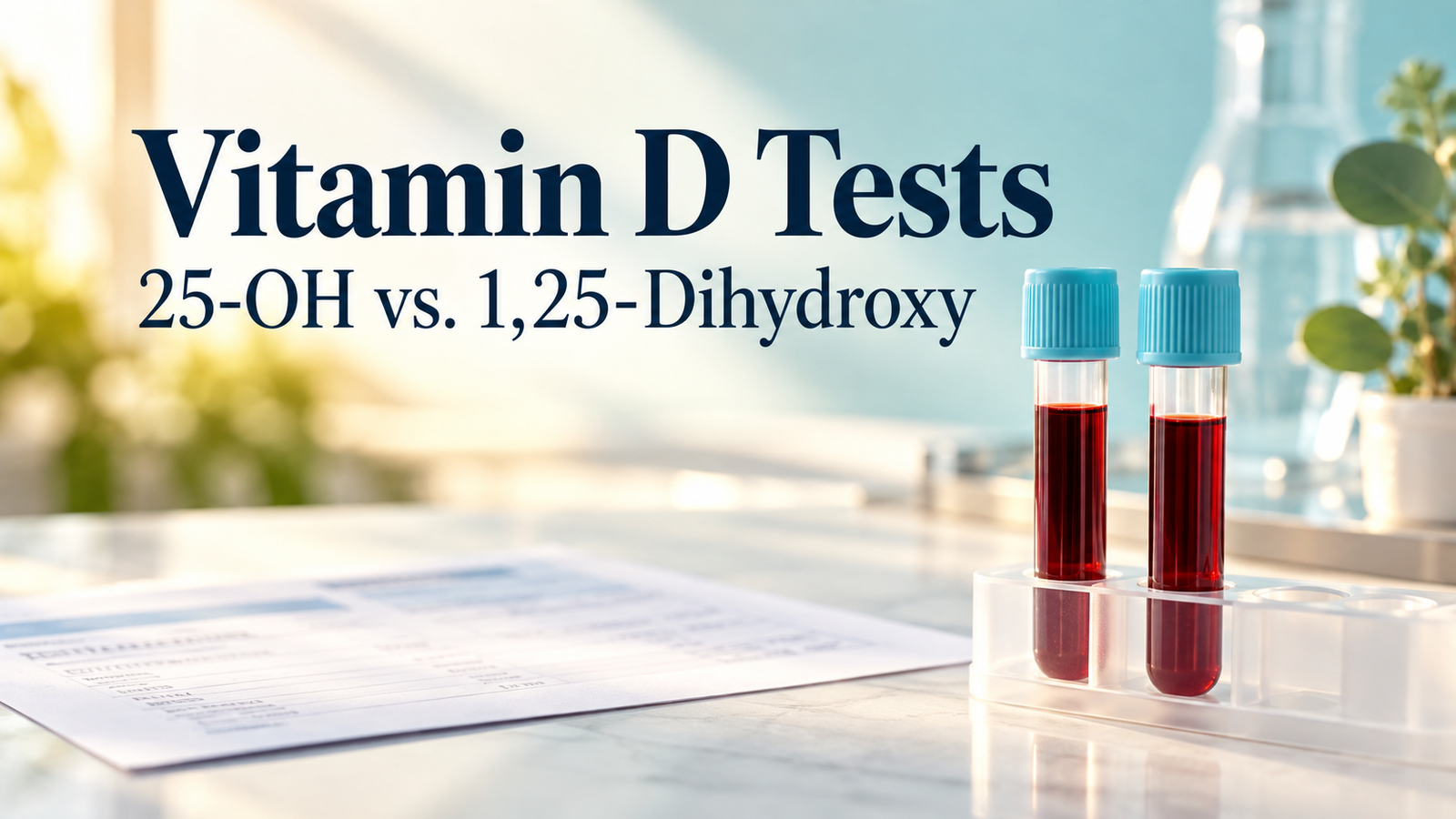
25-OH Vitamin D vs. 1,25-Dihydroxy Vitamin D Tests: What’s the Difference?
This vitamin D test comparison explains the difference between 25-OH vitamin D and 1,25-dihydroxy vitamin D tests. Their names look similar, but they measure different forms of the vitamin. If you are comparing a home kit with a laboratory order, check the full test name before buying.
This guide is educational and does not determine which test you need. Ask your healthcare professional to confirm the appropriate measurement.
Quick Answer
25-hydroxyvitamin D, also written 25(OH)D or 25-OH vitamin D, is the usual measurement for assessing vitamin D status. A 1,25-dihydroxyvitamin D test has a different clinical role. “Active” does not mean it is a better general deficiency test. MedlinePlus explains the common vitamin D blood test.
What Does 25-OH Vitamin D Mean?
The liver converts vitamin D into 25-hydroxyvitamin D. This is the form measured by most vitamin D blood tests. You may see several abbreviations for it on a kit description or report; compare the full biomarker name rather than the marketing headline.
UW Medicine identifies 25-hydroxyvitamin D as the preferred initial measurement of vitamin D status in patients without renal disease. This describes test selection when testing is appropriate; it does not mean everyone needs screening. UW Medicine’s vitamin D testing guidance.
How Is 1,25-Dihydroxy Vitamin D Different?
This test measures a different form and is used in selected clinical investigations. ARUP Laboratories lists high blood calcium and renal failure among its indications. Its guidance states that a normal result does not exclude vitamin D deficiency and recommends 25-hydroxyvitamin D for evaluating deficiency. Do not substitute one test for the other because its name sounds more advanced. ARUP’s 1,25-dihydroxyvitamin D test information.
What to Check Before Ordering a Home Test
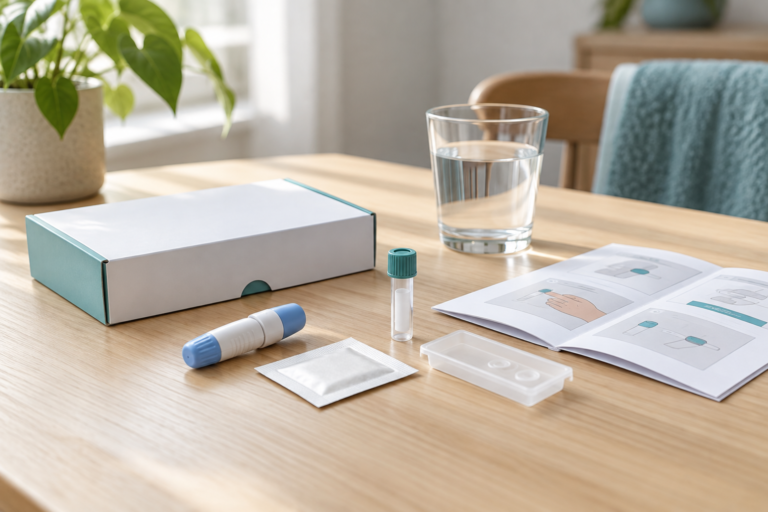
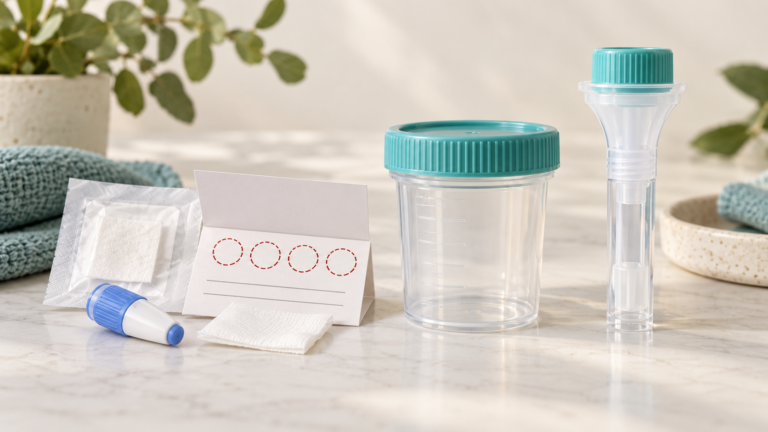
Match the kit’s listed biomarker to the measurement your healthcare professional requested. Then confirm the sample type, collection instructions, laboratory processing, total cost, and help available for understanding results. Home collection describes where the sample is taken; the biomarker name describes what is measured.
Our vitamin D test section introduces a focused home-testing option and its purchasing considerations. The full vitamin testing guide compares it with B12 and folate testing. Choose the marker first rather than buying several tests by default.
Questions to Ask About an Existing Report
What is the complete test name? Which units and reference range does the laboratory use? Does this result answer the original clinical question? Ask a qualified professional to interpret an unexpected result before changing supplements or treatment. A report for one form of vitamin D should not be interpreted using guidance for the other.
Vitamin D Test Comparison: Questions Before Buying
Is a test called “vitamin D” specific enough? Ask for the full biomarker name when the description is unclear. Keep the name from your clinician’s request beside the product’s marker list. If they do not match, contact the provider before placing an order rather than assuming that the two names refer to the same measurement.
Should I order both tests to be thorough? Do not add a second test simply because it measures another form of vitamin D. Ask what additional question the second measurement would answer and how the result would change your care. The comparison in this article is intended to help you ask that question, not to recommend a bundle.
What should I save with my report? Keep the exact test name, collection date, units, laboratory reference range, and any preparation notes together. If you are comparing results over time, tell your healthcare professional if you used a different laboratory or measurement. Avoid comparing two numbers without first checking their labels.
What if the kit description and instructions disagree? Ask the testing provider to resolve the discrepancy before collecting your sample. Confirm whether the kit you received is the product you ordered, which biomarker it measures, and which written instructions apply. Keep the reply with your kit so you can refer back to it.
Final Takeaway
Read the full biomarker name before comparing kits. 25-OH and 1,25-dihydroxy vitamin D measurements serve different purposes. Use the linked sources and your clinician’s request to check the measurement, then review the practical details of collection and follow-up.
Medical disclaimer · Affiliate disclosure. Some linked guides contain affiliate links; we may earn a commission from qualifying purchases at no additional cost to you.

One Comment